
The Texas Public Information Act
Texas gives the public a broad right to government records. The Texas Public Information Act, Government Code Chapter 552, states the policy that people are entitled to complete information about the affairs of government unless a law says otherwise. It applies to county offices like the sheriff, the clerk's administrative files, and other county departments.
Anyone can make a request, and you do not have to say why you want the records. The Act sets out what counts as a public record, what is excepted, the fees an office may charge, and the deadlines it must meet. It does not, however, cover the courts in the same way, which is a key distinction in El Paso County.
The Act even carves out the judiciary in its own section. Government Code Section 552.0035 separates access to information of the judiciary from ordinary requests, which is why an El Paso County requester cannot treat a district court docket like a sheriff report. Each follows a different path.
What the El Paso County Clerk Records
The County Clerk Recording Division keeps a large share of the county's non-court public records. These are the documents that prove ownership, business identity, and major life events. Many are searchable online from the county records page.
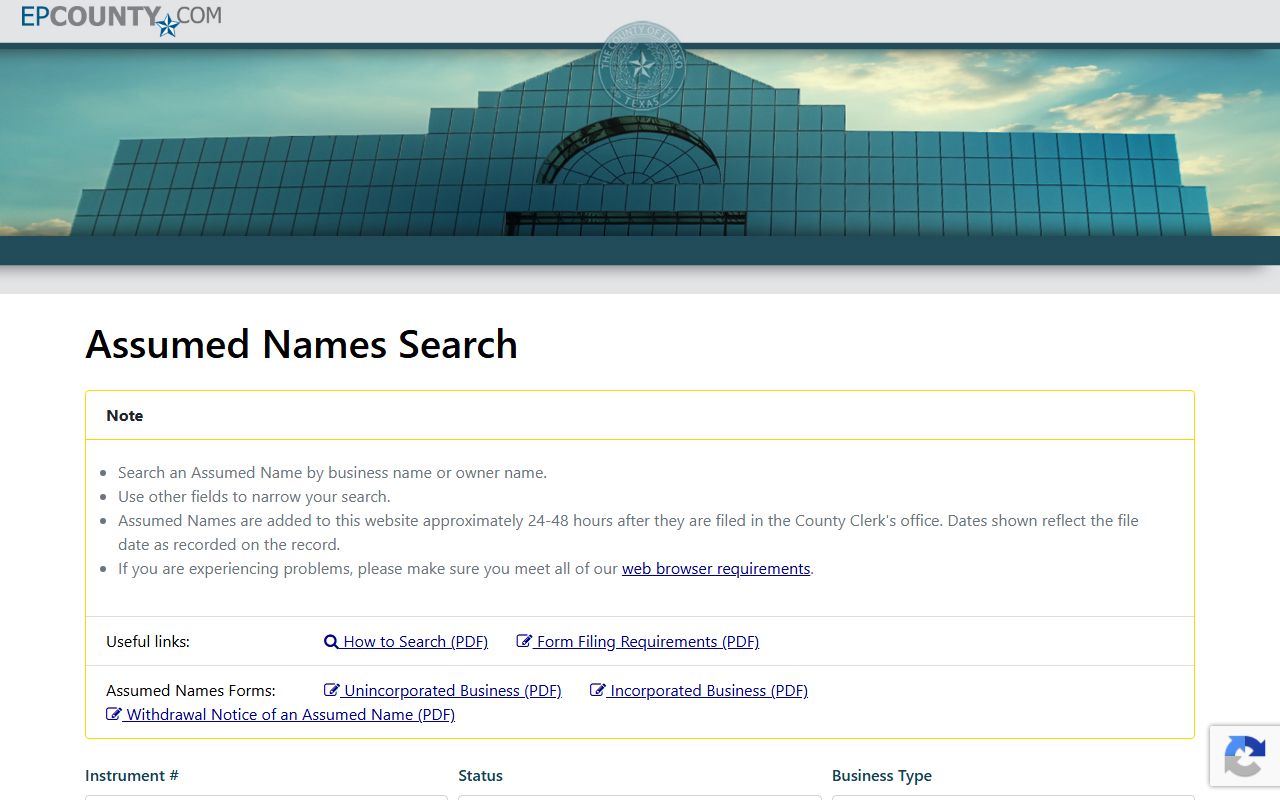
The assumed names search is one example, used to look up a business operating under a DBA. The recording division covers a wide set of records.
- Property deeds, deeds of trust, and liens
- Foreclosure notices and plats
- Assumed names and DBA filings
- Military discharge (DD-214) records and cattle brands
- Oaths and deputations of public officials
The County Clerk has also modernized access in ways many counties have not. A free Property Fraud Alert lets you register a name and get a warning if a monitored name is recorded, which helps catch deed fraud early. Historic Deed Index Books from 1874 to 1963 are available through a digitized service, which gives deep value for genealogy and old property research.
El Paso County Vital Records
The County Clerk Vitals Division keeps birth and death records along with marriage licenses. The county offers online index searches for both, which help confirm whether a record exists before you order a certified copy.
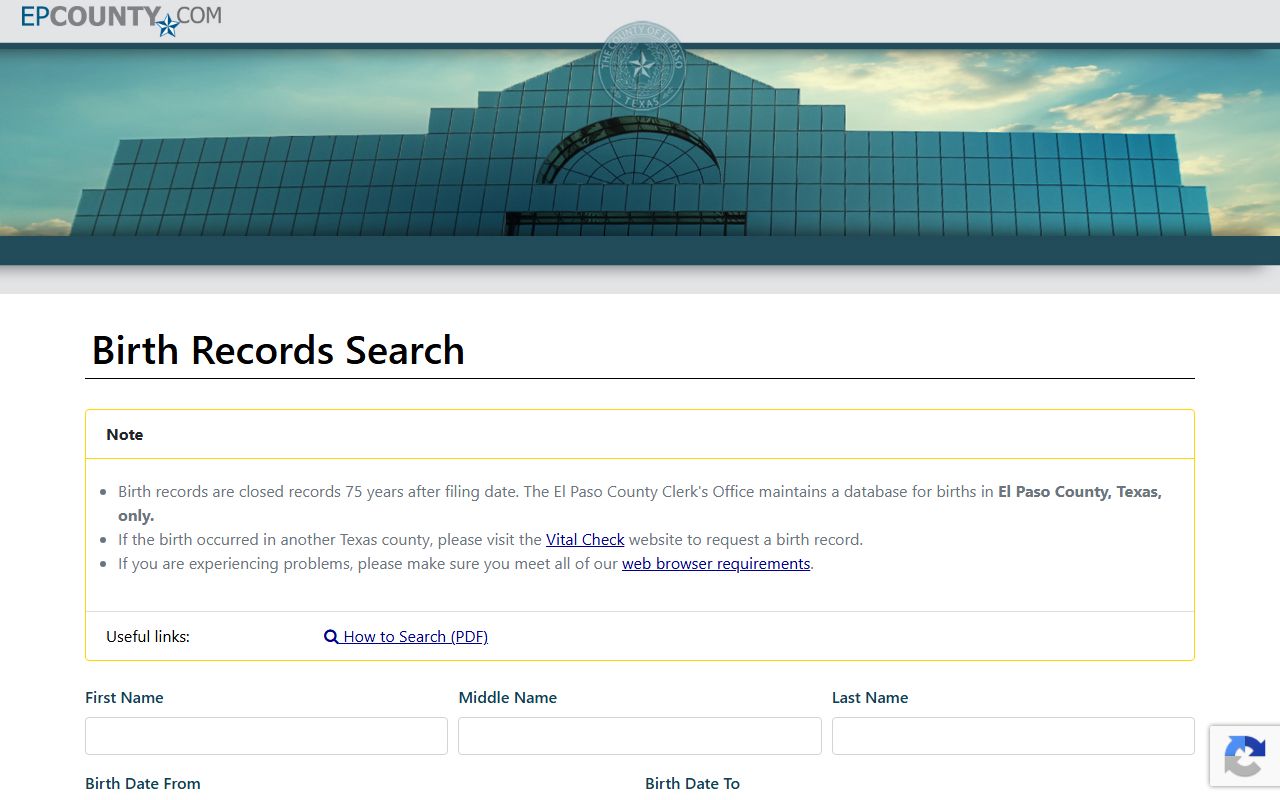
The birth index search looks up birth records, and a separate tool covers deaths.
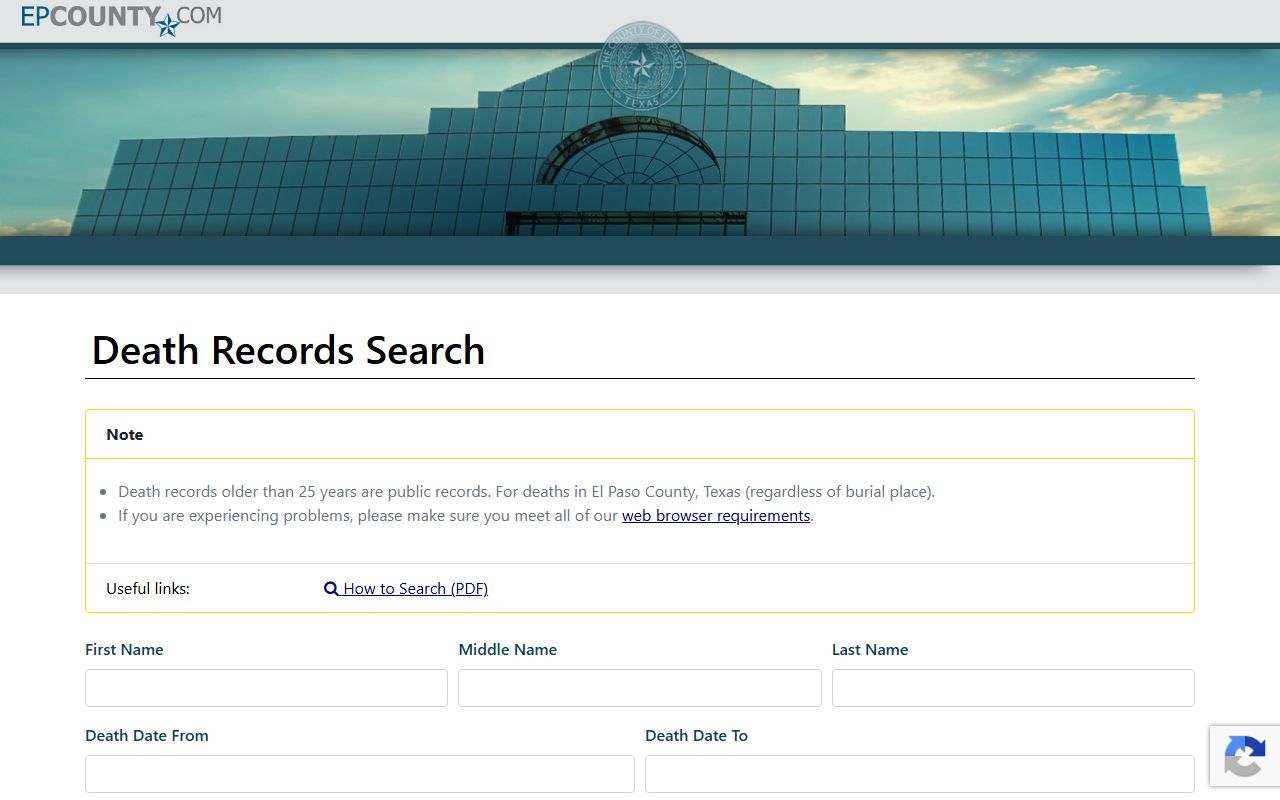
The death index search works the same way. Vital records carry privacy limits, so certified copies of birth records in particular are restricted to eligible people.
Property, Foreclosures, and Official Records
Real property records and foreclosure notices are among the most searched public records. The county posts a foreclosure search and an official public records search that cover recorded documents tied to land and ownership.
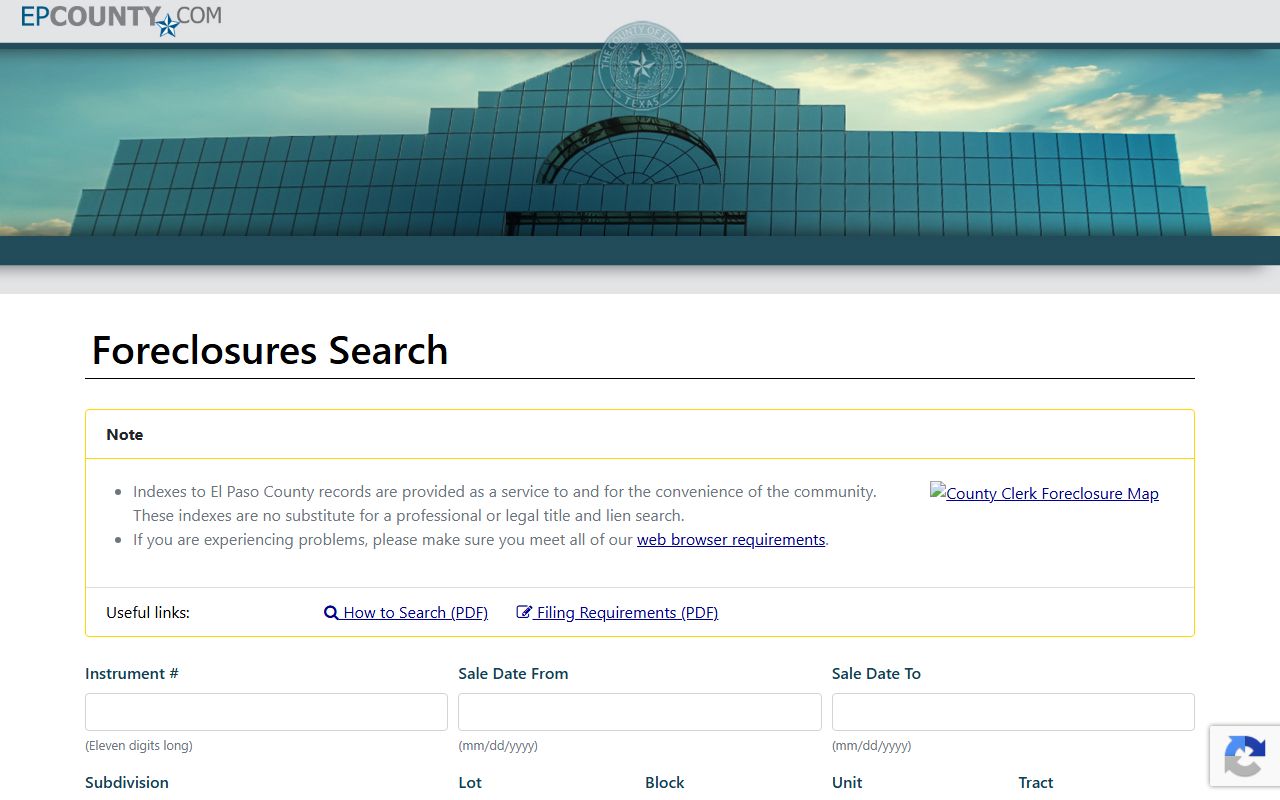
The foreclosures search lists notices, and the county also records oaths and deputations of officials.
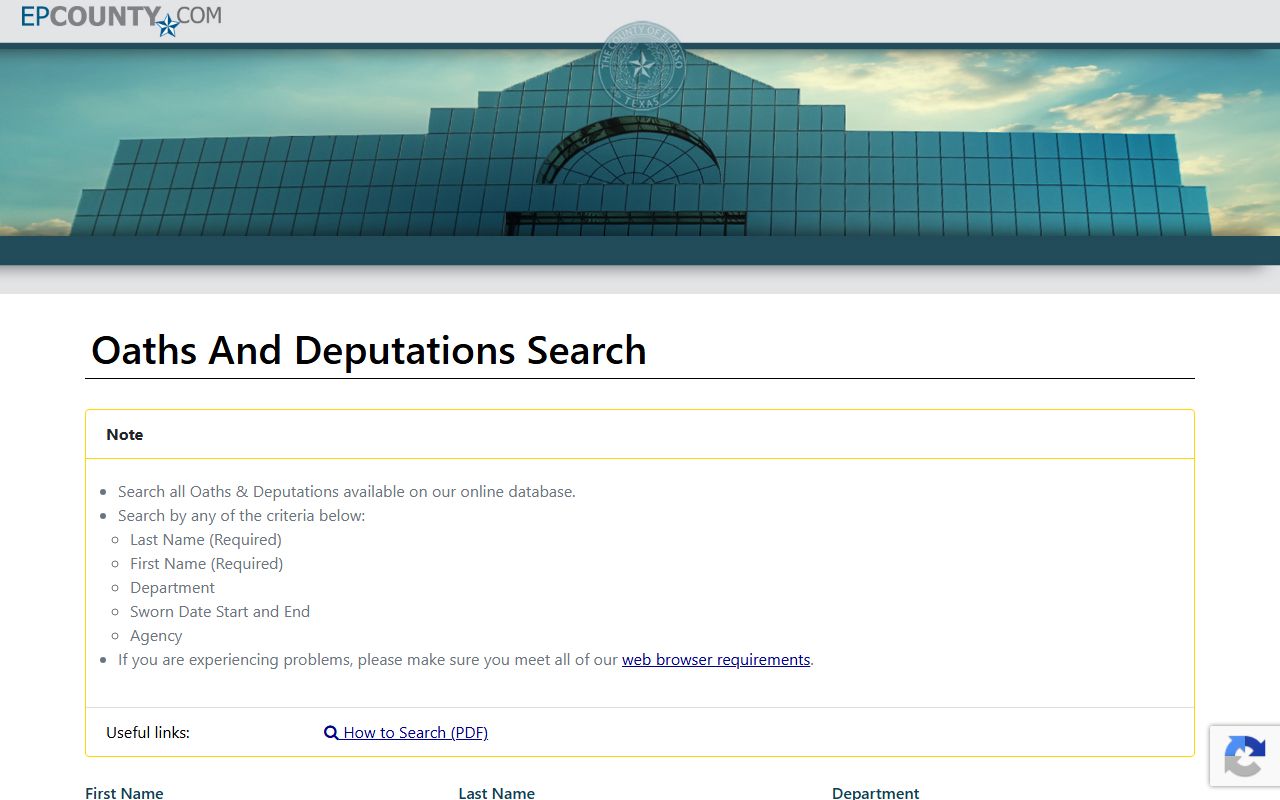
The oaths and deputations search rounds out the recording records. The County Clerk also offers a free Property Fraud Alert that can warn you if a monitored name is recorded.
How to File a Public Records Request in El Paso County
When a record is not online, a written request under the Public Information Act is the route. Address the request to the office that holds the records, and describe what you want clearly.
- Identify the right office, such as the Sheriff, a county department, or a clerk's administrative records.
- Describe the records you want, with names, dates, and a clear scope.
- Submit the request in writing, by email or mail, to that office.
- Wait for the response within the time the Act allows.
- Pay any allowed fees, then receive the records or a written reason for any withholding.
What to Include in a Public Records Request
There is no single county form for every office, so a clear written request is what matters. Including the details below helps an office find and release records quickly.
| Field | Required | What to Include |
|---|---|---|
| Requester Name and Contact | Yes | Name, email or mailing address, phone |
| Description of Records | Yes | Specific documents, names, and subject |
| Date Range | No | Narrows the search and lowers cost |
| Format Preference | No | Paper, electronic, or certified copy |
| Office Addressed | Yes | The department that holds the records |
Response Timelines
The Public Information Act expects a prompt response. An office must produce the records promptly or, if it believes a record is excepted, seek a ruling from the Texas Attorney General within the time the Act sets. The office cannot simply ignore a request.
If a request is large or unclear, an office may ask you to narrow it or may give a cost estimate first. Responding to that estimate keeps the request moving, since work can pause until you confirm you want to proceed.
Public Records Fees in El Paso County
Searching the online records is free. Fees apply to copies, large requests, and certified documents. Public Information Act charges follow state cost rules, and recorded-document and certified-copy fees follow the County Clerk schedule. The categories below show how charges work.
| Item | Amount |
|---|---|
| Per-page copy | Per Texas cost rules |
| Labor for large requests | Per Texas cost rules, when allowed |
| Certified copy | Per County Clerk fee schedule |
| Recorded document copy | Per County Clerk fee schedule |
Note: Ask for a cost estimate up front on a large request, since charges for copies and labor can add up quickly.
Courts Are Not Subject to the Public Information Act
This is the part that trips people up. The Texas Judicial Branch states that courts and judicial agencies are not subject to the Public Information Act or to federal FOIA. Court case files follow court rules, statutes, and sealing orders instead, and non-case judicial records follow Rule of Judicial Administration 12.
So a request for a court file does not go through a Public Information Act letter. The Texas Judicial Branch open records policy explains the split. For court records, use the case search and the clerk, not a Public Information Act request.
Sheriff and District Attorney Requests
Two county offices handle a heavy share of public information requests. The Sheriff's Office takes open-records, inter-agency, and background requests at its records email, DG-SO-Records@epcountytx.gov. The District Attorney handles Public Information Act requests at a separate address, DAPIARequests.gem@epcounty.com, and warns the public not to email case questions because of case sensitivity.
For each, include the specific names, dates, and report or case numbers you have. A clear, narrow request to the right office is far more likely to get a fast, complete answer.
El Paso County by the Numbers
Population and land data are public too, and they help frame how much record-keeping the county does. Census figures put El Paso County's 2020 population at 865,657, across a land area of about 1,013 square miles, with a density near 854 people per square mile.
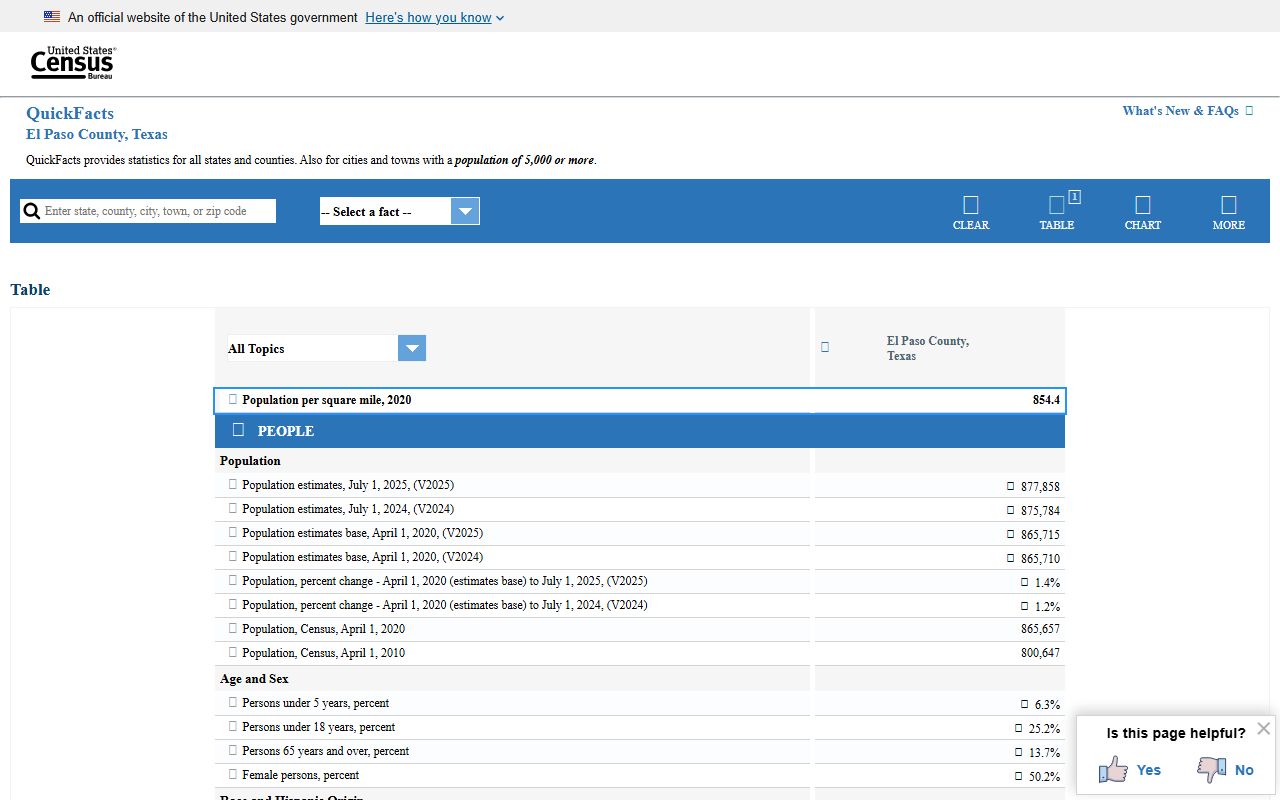
The Census QuickFacts page is the official source for these figures. A county this size generates a large volume of deeds, business filings, and vital records each year.
Records That Are Exempt
Not every record is open. The Public Information Act lists exceptions, and other laws close whole categories. Personal identifiers like Social Security and driver license numbers are withheld. Some law enforcement, victim, and ongoing-investigation records are protected. Court-sealed, juvenile, and certain health records are confidential by statute. When an office withholds a record, it must usually point to the law that allows it. If you believe a record was wrongly withheld, the denial process explains how to challenge that decision through the Attorney General and, where needed, the courts.
If Your Public Records Request Is Denied
A denial is not always the end. If an office believes a record is excepted, it generally must ask the Texas Attorney General for a ruling within the time the Act sets, and the Attorney General decides whether the record must be released. You can take part in that process by explaining why the record is public.
If an office misses a deadline or withholds without a basis, the Act provides a path to seek a ruling and, in some cases, to go to court. Keeping a copy of your request and the date you sent it matters, since the timeline runs from when the office received it.