
What Probate Covers in El Paso County
Probate is the court process that handles what happens to a person's property and affairs, often after death. El Paso County probate courts probate the wills of people who have died, declare heirs when a person dies without a will, set up guardianships for incapacitated adults and minors, and oversee court-ordered mental health commitments. They also hear lawsuits that arise from estates and guardianships.
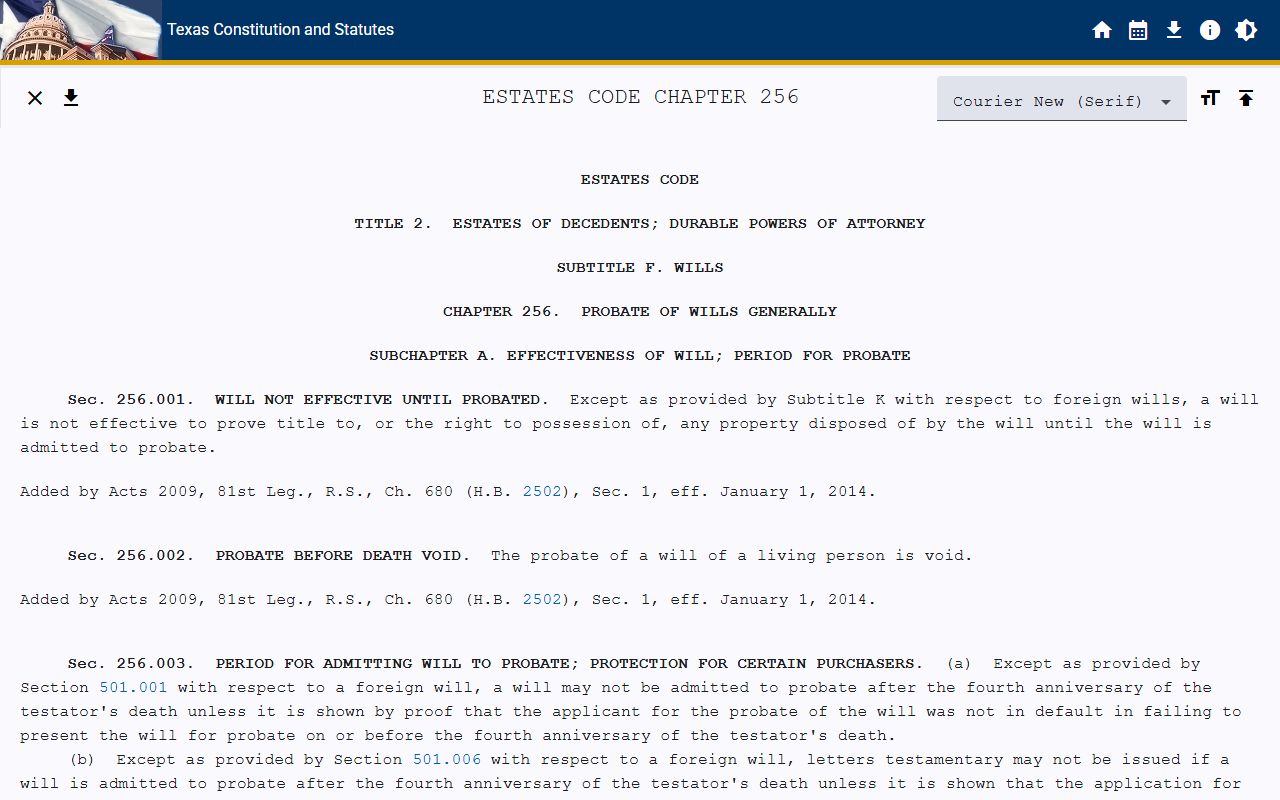
The rules for probating a will and administering an estate come largely from the Texas Estates Code. A will has no force until a court admits it to probate, which is why even a clear will usually goes through the court.
The probate courts also hear lawsuits that are part of or related to an estate or guardianship. That can include disputes among heirs, claims against a personal representative, and fiduciary litigation. So a probate court does more than stamp wills. It can run a full contested case from filing to judgment.
Probate Courts in El Paso County
El Paso County has two statutory probate courts, each headed by an elected judge. They sit in the downtown courthouse and share the county's probate and guardianship work. The county lists both on its probate courts page.
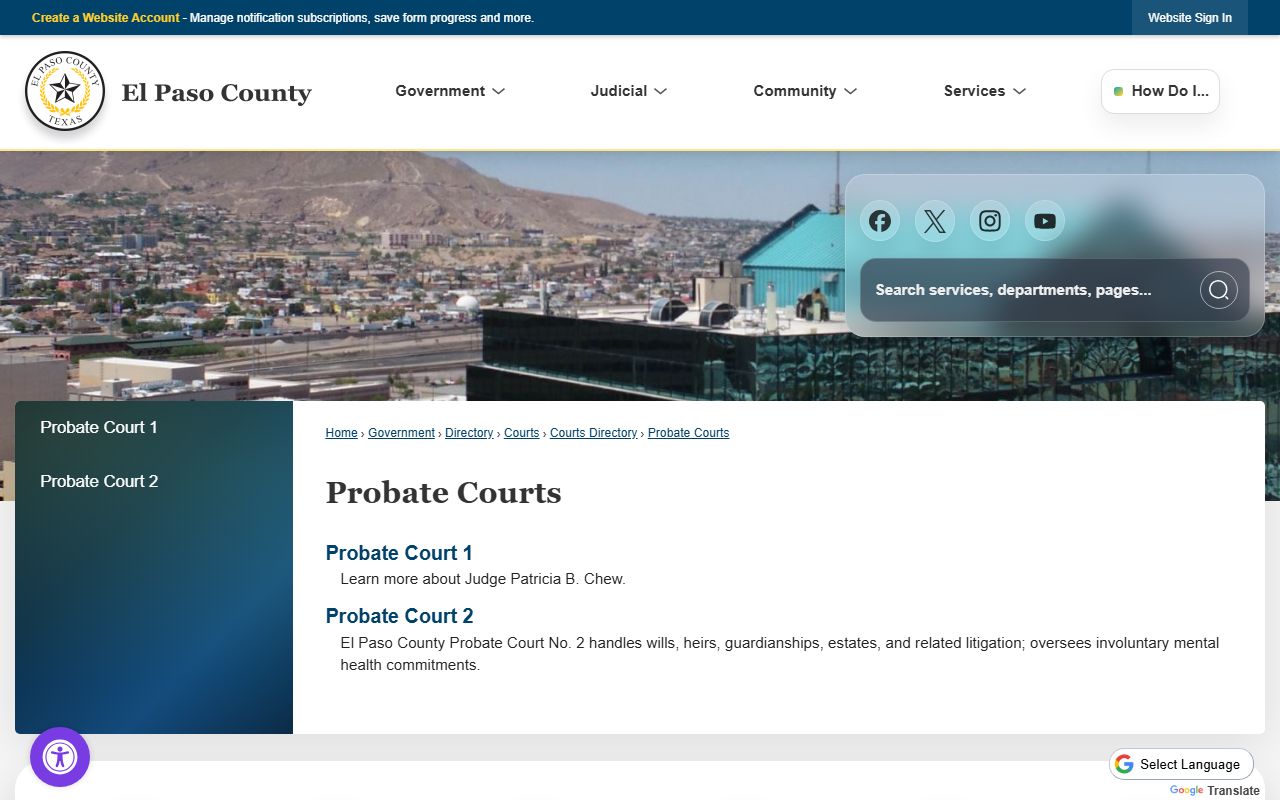
The El Paso County Probate Courts index links each court. The contacts for both follow below.
Probate Court No. 1
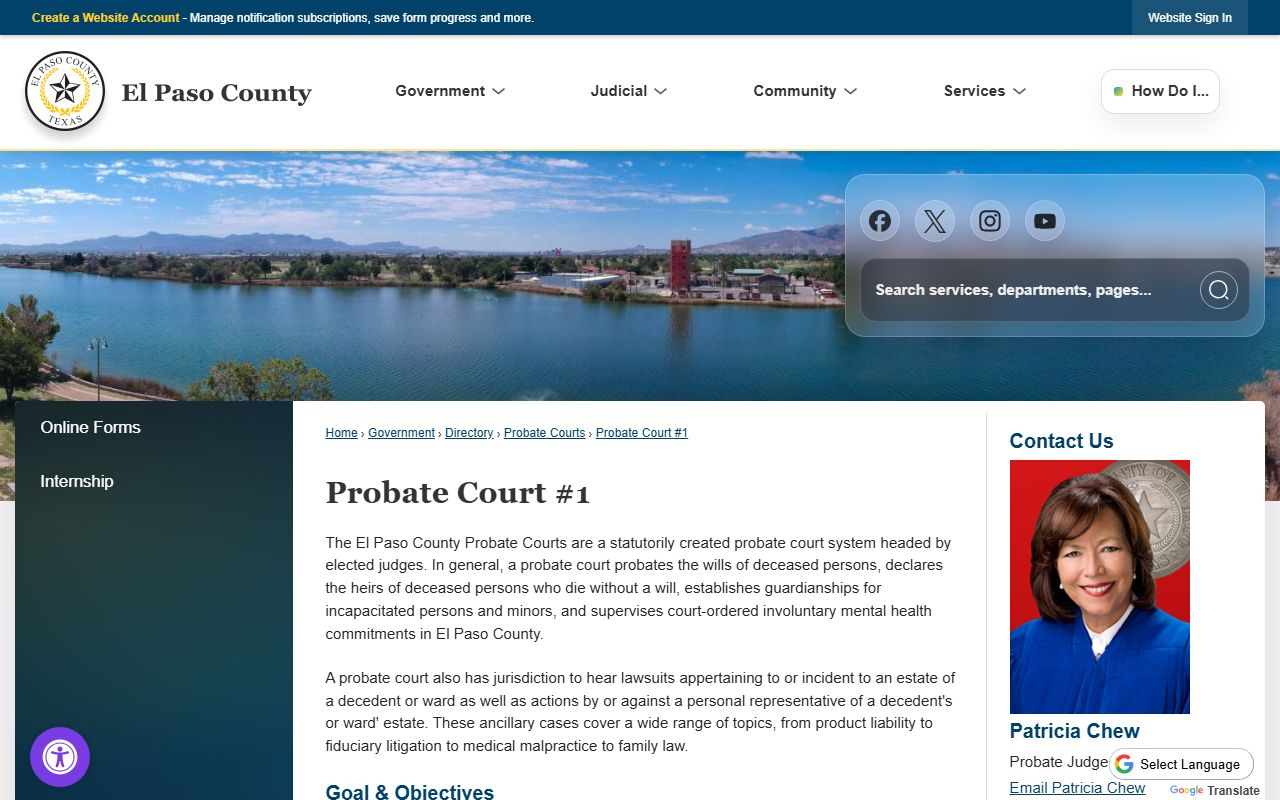
Probate Court No. 1 is led by Judge Patricia Chew and sits on the twelfth floor of the courthouse. It hears wills, estates, guardianships, and related matters, and it shares the county's probate docket with Probate Court No. 2.
Probate Court No. 2
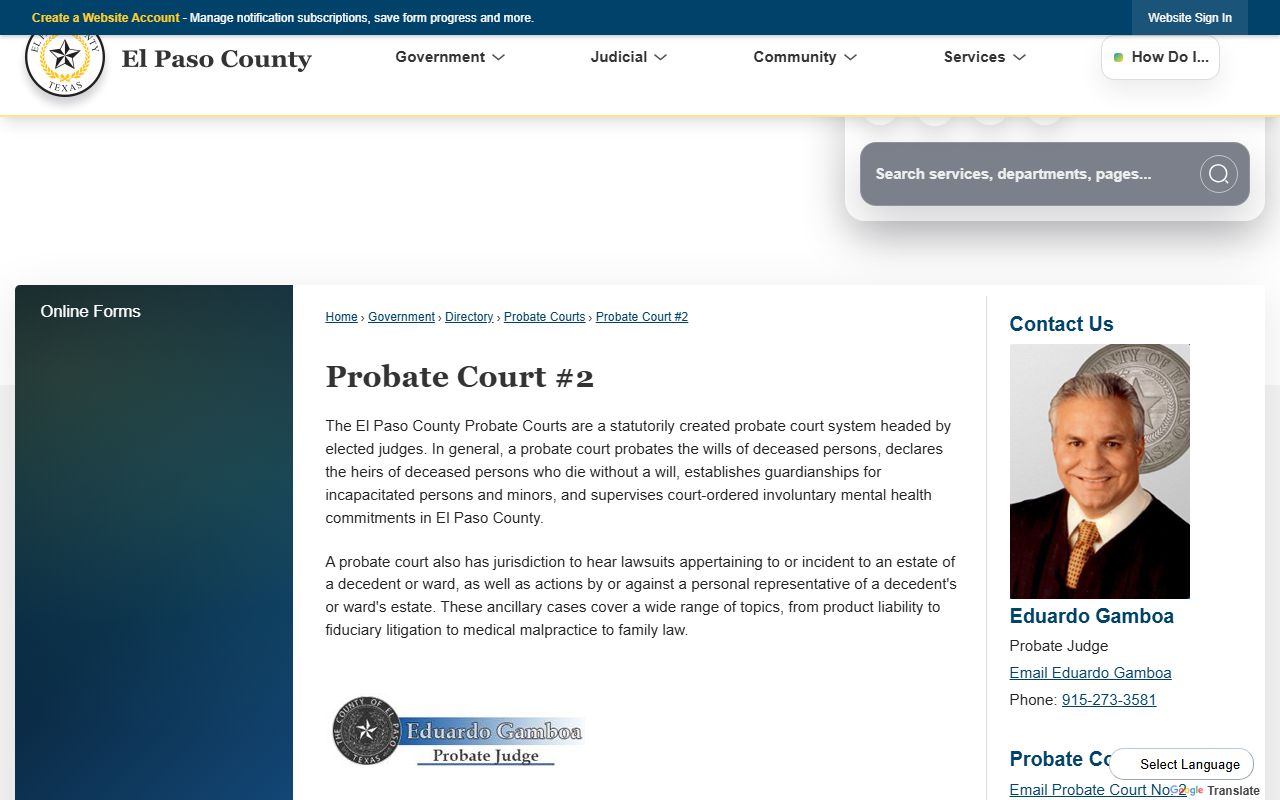
Probate Court No. 2 is led by Judge Eduardo Gamboa and handles the same kinds of estate and guardianship matters. It is located in Suite 422 of the courthouse, on a lower floor than Probate Court No. 1.
How to Search El Paso County Probate Records
There is no separate probate-only search. Probate cases are searched through the county's civil, family, and probate case search, where you set the case category to Probate. Search by case number, party, business, attorney, or bar number, and add a date range or status to narrow the list.
- Open the civil, family, and probate case search from the Records Search hub.
- Set the case category to Probate where possible.
- Enter the case number, or a party last and first name.
- Add a date range or an open or closed status to narrow results.
- Finish the security check and open the matching case.
The County Clerk Probate-Civil Division
The County Clerk Probate-Civil Division is the clerk for these courts. It files original wills, accepts wills for safekeeping, takes annual guardianship reports, and issues letters testamentary and guardianship letters. The Probate-Civil Division also handles copy requests by email, walk-in, and mail. To file an original will, the mailing address routes to the County Clerk's Office, Attention Probate Division, at the courthouse on San Antonio Avenue. The division publishes a set of forms for common probate tasks.
- Annual Report and Annual Report for Co-Guardians
- Authorization and MERP Certification
- Citation Request Form
- Guardianship Help Form and Probate Help Form
- Pro Se Court Policy
- Small Estate Affidavit
Filing a Will and Getting Letters Testamentary
Probate follows a sequence, though the path depends on whether there is a will, who the heirs are, and the size of the estate. The steps below outline the common route from a first filing to letters that prove authority.
- Decide the matter type: will probate, heirship, guardianship, small estate, or safekeeping.
- Search existing records by party or case number in the probate case search.
- File the original will or application with the County Clerk Probate-Civil Division.
- Pay the current probate filing fee from the County Clerk fee schedule.
- Handle any required citation, service, or public notice.
- Attend the hearing in Probate Court No. 1 or No. 2.
- Obtain letters testamentary, letters of administration, or guardianship letters.
- File inventories, annual reports, or closing documents as the court requires.
Guardianship and Heirship in El Paso County
Not every probate case starts with a will. When a person dies without one, the court can declare the heirs and decide how the estate passes under Texas law. This is an heirship matter, and it often needs proof from people who knew the family, since there is no will to name who takes what.
Guardianship is the other major track. When an adult cannot manage their own affairs, or a minor needs a legal guardian, a probate court can appoint one and then supervise the role. A guardian files annual reports so the court can watch the ward's care and finances. These cases can run for years, and the County Clerk lists specific forms for annual reports and co-guardians.
Probate Filing Fees
Probate fees cover the application, certified copies, and guardianship filings. The County Clerk sets the amounts on its current fee schedule rather than a single flat number, so confirm the figure before you file. The categories below show what each fee covers.
| Item | Amount |
|---|---|
| Original probate application | Per County Clerk fee schedule |
| Letters testamentary or guardianship letters | Per County Clerk fee schedule |
| Certified copy | Per County Clerk fee schedule |
| Guardianship application | Per County Clerk fee schedule |
Note: A filer who cannot afford court costs may ask the court about a Statement of Inability to Afford Payment of Court Costs.
Probate Terms Defined
Probate paperwork uses words that are easy to mix up. A short glossary helps when reading a file or a form.
- Testator
- The person who made the will.
- Executor
- The person named to carry out the will.
- Intestate
- Dying without a valid will.
- Letters Testamentary
- The court document proving an executor's authority.
- Guardianship
- A court appointment to care for a minor or an incapacitated adult.
- Small Estate Affidavit
- A simpler path for a small estate that meets the rules.
What El Paso County Probate Records Show
A probate file builds over the life of a case. It can hold the application, the will, the order admitting the will, letters testamentary or guardianship letters, an inventory of assets, annual reports, accountings, citations, bonds, and small estate affidavits. Guardianship files add annual reports on the ward's condition and finances.
Because a probate case can run for months or years, the docket grows as filings come in. Reading it in order shows how the estate or guardianship moved from the first application to the final distribution or closing.
The online search shows the case index and docket, but not always the full documents. To read a filed will, an order, or an inventory, you may need to request the document from the County Clerk. A certified copy, which a bank or a title company may require, comes from the clerk rather than from the online view.
Statutory Framework for El Paso County Probate
The two probate courts exist because Texas law allows counties to create statutory probate courts. That framework is set in Texas Government Code Chapter 25, which defines statutory probate and county courts at law. It is the reason El Paso County has probate courts that sit apart from the district courts.
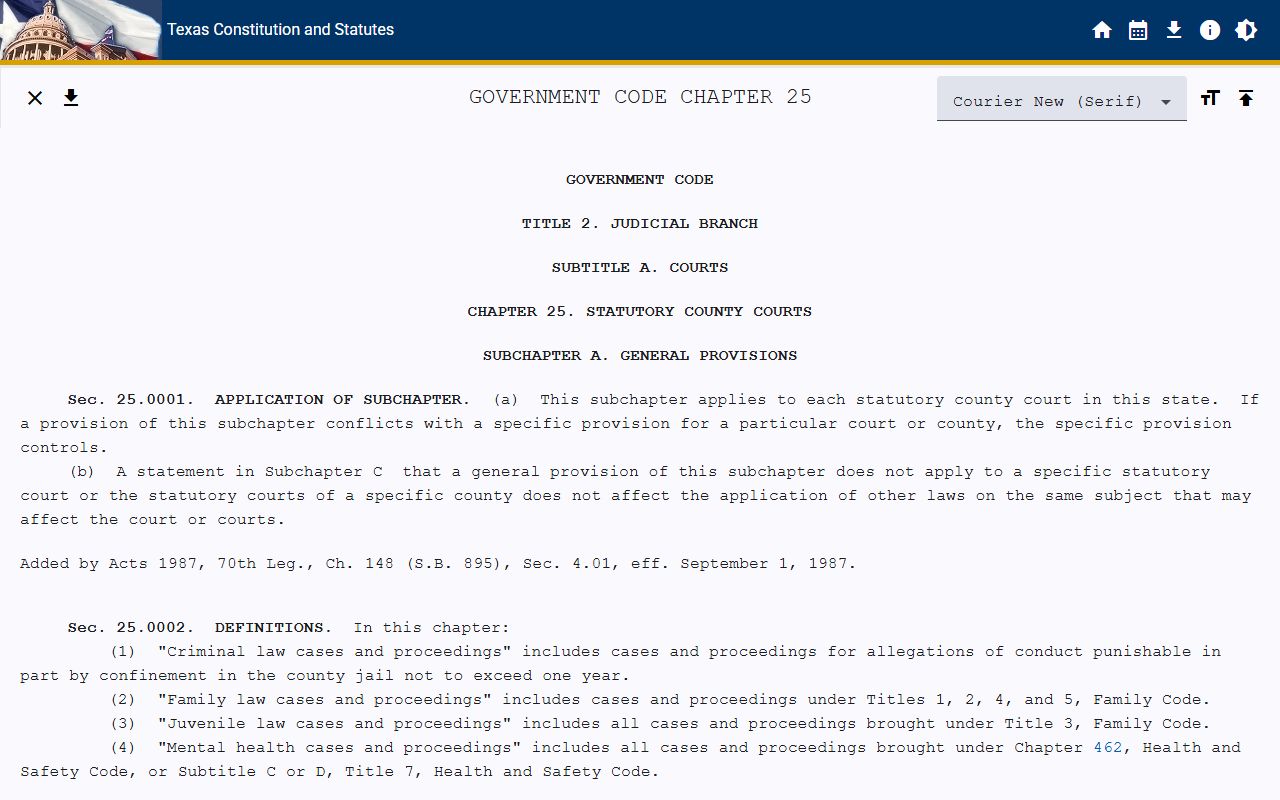
The Estates Code and the Government Code together set how these courts are created and what they may hear, from estates to guardianships to mental health commitments.
Restricted Probate and Guardianship Records
Most probate files are public, but parts can be restricted. Guardianship cases involving minors and incapacitated adults touch on health and personal information, and mental health commitment records carry strong privacy protections. Records that involve minors can fall under confidentiality rules similar to those for juvenile matters.
Confidentiality for records involving minors is shaped by rules like those in Texas Family Code Chapter 58. When a probate or guardianship file involves a minor or a sensitive health matter, expect some parts to be closed and ask the clerk before assuming full public access to the file.