
Arrest Records in El Paso County
Arrest records in El Paso County are law enforcement records. The Sheriff's Office, led by Sheriff Oscar Ugarte, books people into the county's two jails and records the arrest, the charges at booking, and a booking number. City police, constables, and state troopers also make arrests that flow into the county jail and court systems. An arrest record captures that first event, before a court has weighed anything.
Keep arrest records separate from criminal court records and from convictions. An arrest record shows a booking. A criminal court record shows what the prosecutor filed and how the court resolved it. A conviction is the narrow result where the court enters a finding or plea of guilt. For the full court file on a charge, see the El Paso County court records page.
The scale here is large. The Sheriff's Detention Bureau runs the Downtown Detention Facility and the Jail Annex, with a combined capacity of 2,906. County material notes that the system booked more than 400,000 individuals over a recent decade. That volume is why the county keeps a fast online roster for current custody and routes older or detailed requests back to the Sheriff or the courts.
How to Search El Paso County Arrest Records
The county runs two tools that matter for arrests. The jail records search shows who is in custody now, and the criminal case search shows filed cases by name or citation. Both live on the official El Paso County Records Search hub. To check a current booking, start with the jail records search; to check a filed charge, use the criminal case search.
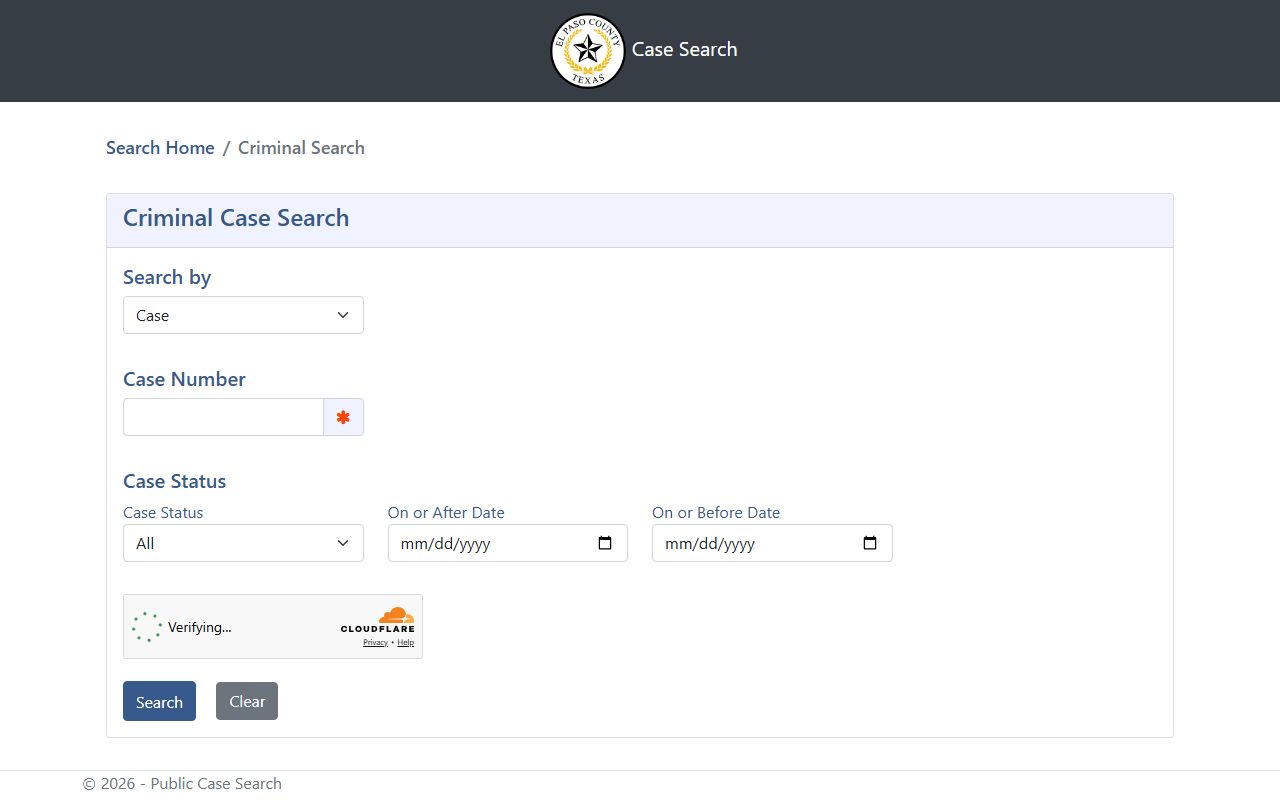
- Open the Records Search hub and pick jail records for a current booking or criminal cases for a filed charge.
- Search the jail roster by defendant name or booking number.
- Search criminal cases by defendant, citation number, business, attorney, or bar number.
- Add a date of birth or a date range to cut down common-name matches.
- Finish the security check and run the search.
For a statewide criminal history, the county jail and court tools are not enough. The Texas Department of Public Safety keeps the state criminal history file, and that is a separate, identity-verified record described further below.
What an El Paso County Arrest Record Shows
The jail records search is built around a few fields, and the booking file is organized the same way. Because the portal runs a live security check before results load, the exact profile fields are confirmed only after a real search. The table below lists the fields the booking search is designed around.
| Field | What It Shows |
|---|---|
| Booking Number | The custody identifier assigned at intake. |
| Defendant Name | Last, first, and middle name of the person booked. |
| Date of Birth | Used to tell apart common names. |
| Booking Date | When the person entered custody. |
| Charges at Booking | The offenses recorded at intake, not a final result. |
| Custody Status | Whether the person is currently in county jail. |
The county labels this tool as current jailings only, so it shows people in custody now rather than a full history of every past booking.
Arrest Records vs Criminal Court Records
An arrest happens at booking. A court record begins later, only if a prosecutor files charges. The two records come from different offices and answer different questions, so it helps to see them side by side.
| Arrest Record | Criminal Court Record | |
|---|---|---|
| Source | Sheriff or police booking | County or district court clerk |
| Created When | At booking | When charges are filed |
| Contents | Booking number, charges at arrest, custody status | Charging document, plea, disposition, sentence |
| Where to Search | Jail records search | Criminal case search |
A booking does not guarantee a filed case, and a filed case does not always start with a county jail booking. Search both systems when you are not sure where a matter stands.
Charges vs Convictions
The most common mistake people make is reading a charge as a conviction. A charge is an accusation. A conviction is the court's finding or accepted plea of guilt. A case can also end in dismissal, acquittal, or deferred adjudication, and each carries a very different meaning.
| Charge | Conviction | |
|---|---|---|
| Stage | Accusation at arrest or filing | Verdict or accepted plea |
| Who Decides | Police and prosecutor | The court |
| Proof Standard | Probable cause | Beyond a reasonable doubt |
| Means Guilt | No | Yes |
Note: Always read the disposition line, not just the charge line, before you draw any conclusion about an El Paso County case.
Sealed vs Expunged El Paso County Records
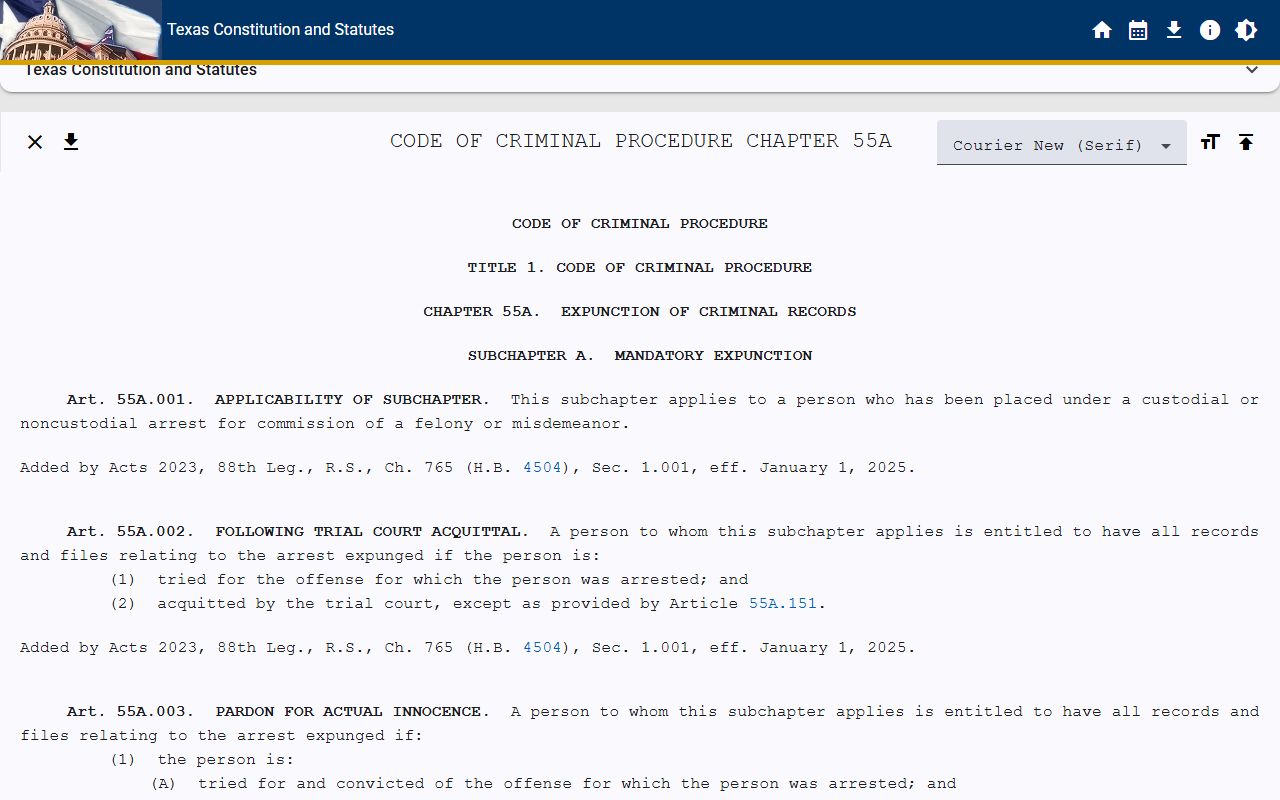
Texas offers two ways to limit access to a criminal record, and they are not the same. Nondisclosure, often called sealing, hides a record from most public searches under Government Code Chapter 411. Expunction destroys or returns qualifying records under Code of Criminal Procedure Chapter 55A.
| Nondisclosure (Sealed) | Expunction | |
|---|---|---|
| Statute | Government Code 411 | Code of Criminal Procedure 55A |
| Effect | Hidden from most public searches | Records returned or destroyed |
| Who Can Still See | Criminal justice, some licensing bodies | Almost no one |
| Typical Use | Some deferred or misdemeanor outcomes | Acquittal, dismissal, mistaken identity |
Both are legal petitions, not a simple clerk copy request. Eligibility turns on the charge, the disposition, any waiting period, and later criminal history.
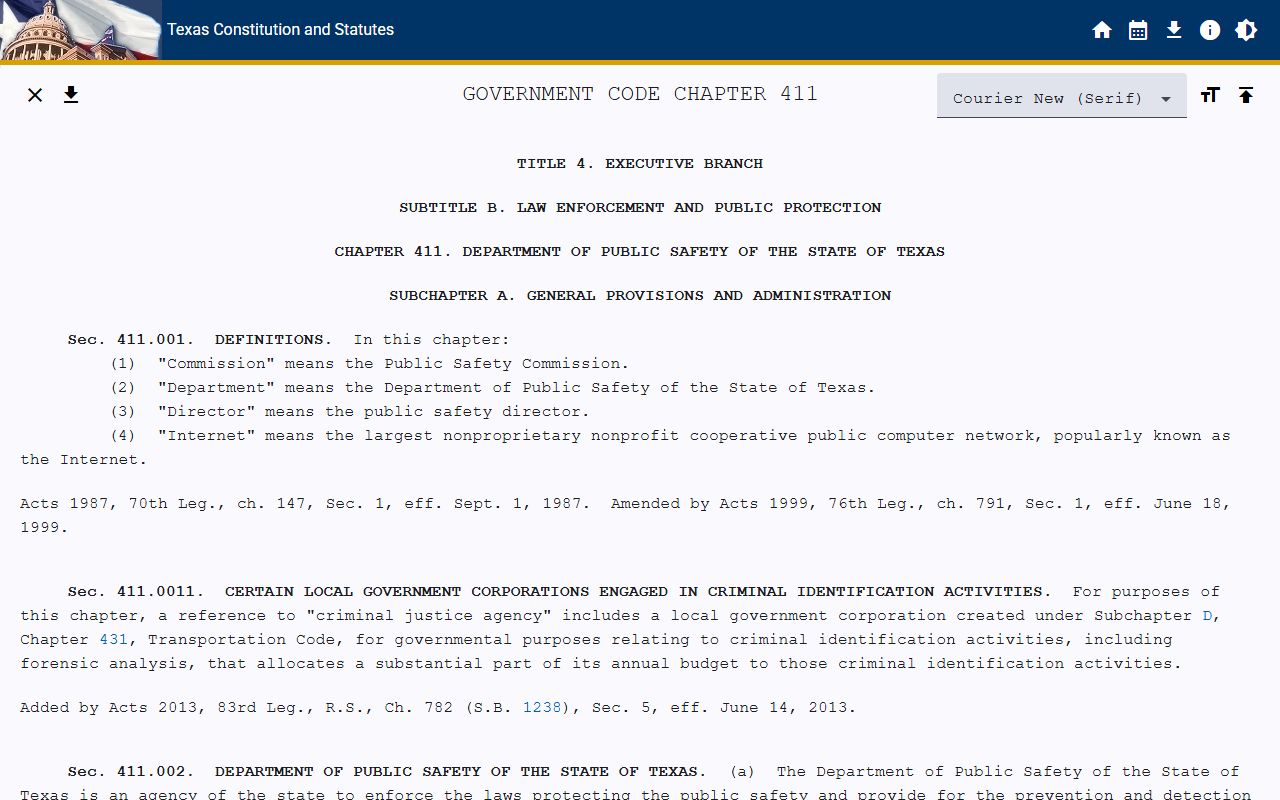
The criminal history statute spells out who may still access a nondisclosed record. Common reasons a petition is denied include a nonqualifying offense, an unresolved case, a missing waiting period, or a new conviction during the wait.
Mugshots and Booking Photos
A mugshot is a booking photo taken when a person enters custody. In El Paso County, booking data is tied to the jail records system. The county jail search is labeled current jailings only, and a live security check blocks automated tools from confirming exact result fields. For that reason, no responsible source should promise that a public profile shows a mugshot, a physical description, or a pod location until a person checks it in a live browser session.
To confirm whether a booking photo is available, search the current jail roster or call the Downtown Detention Facility inmate information line at 915-273-3770. For the full roster and facility details, use the El Paso County inmate records page.
Booking photos held by the Sheriff are official records. Many third-party mugshot sites repost old photos, charge fees to remove them, and rarely reflect the final outcome of a case. The safe source is the county jail roster or the Sheriff's Office itself, not a private mugshot site. A booking photo also says nothing about guilt, since the case may have ended in a dismissal or an acquittal.
Statewide Criminal History Search
County jail and court tools only show El Paso County matters. For a statewide criminal history, the Texas Department of Public Safety keeps the official file. DPS criminal history searches are identity-verified and follow the rules in Government Code Chapter 411. The County Clerk Criminal Division also offers misdemeanor background checks and copies of misdemeanor records.
If a charge crossed into another county or into federal court, the El Paso County systems will not show it. A person checking a full history may need the DPS record, the county criminal search, and a federal search, since each system holds only its own cases.
Background Check Considerations
There is a real difference between a casual record lookup and a regulated background check. Employment, housing, credit, and insurance screening fall under the federal Fair Credit Reporting Act, which sets strict rules on accuracy, notice, and use. A free public search of arrest or court records is not an FCRA-compliant background check.
Important: This site is not a consumer reporting agency under the FCRA, and its information may not be used for employment, tenant, credit, or insurance decisions.
Prosecution and Defense in El Paso County
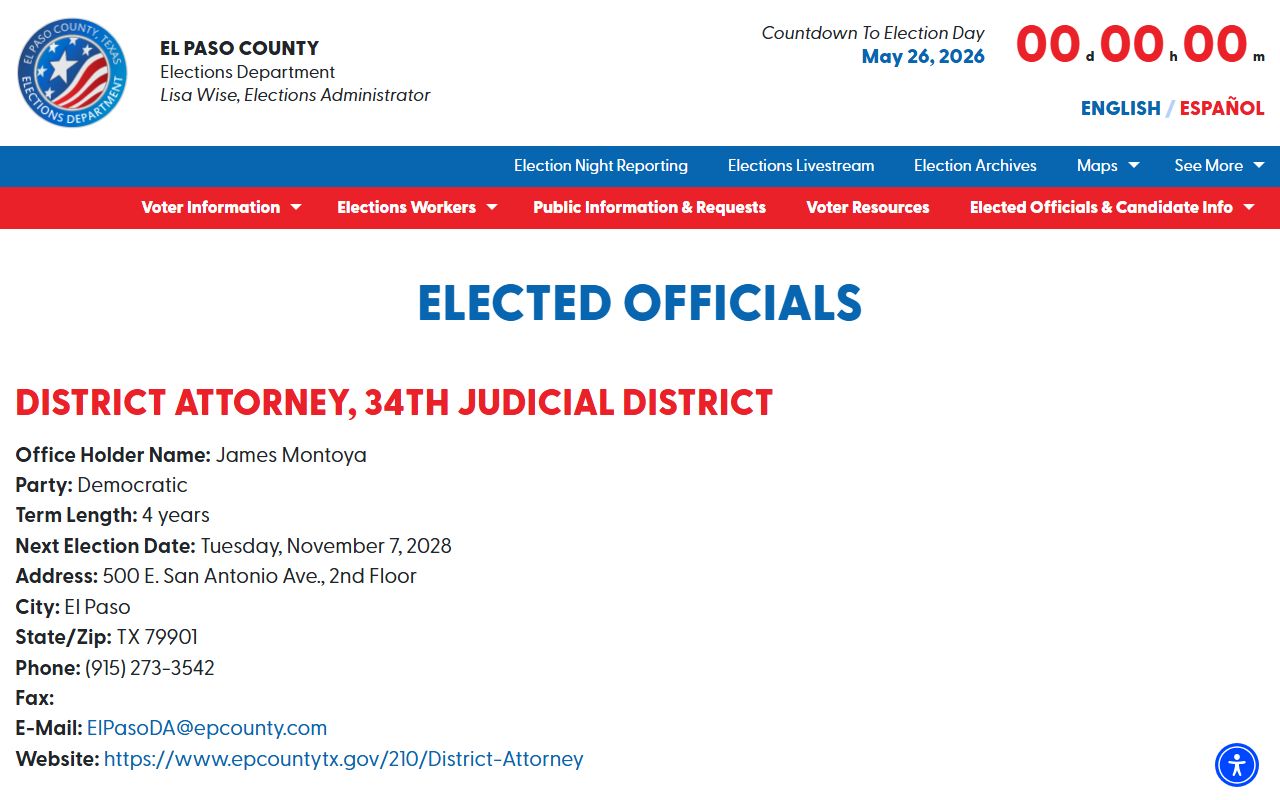
Two offices shape most criminal cases after an arrest. The District Attorney prosecutes state cases, and the Public Defender represents many people who cannot afford a lawyer. James Montoya took office as District Attorney for the 34th Judicial District on January 1, 2025, and prosecutes cases in El Paso, Culberson, and Hudspeth counties from offices at 500 E. San Antonio, 2nd Floor.
The El Paso County Public Defender represents adults and juveniles accused of crimes who qualify for appointed counsel. The office does not take walk-in applications and does not decide who is indigent. A person must apply through Pretrial Services or the court, and a judge or jail magistrate must appoint the office.
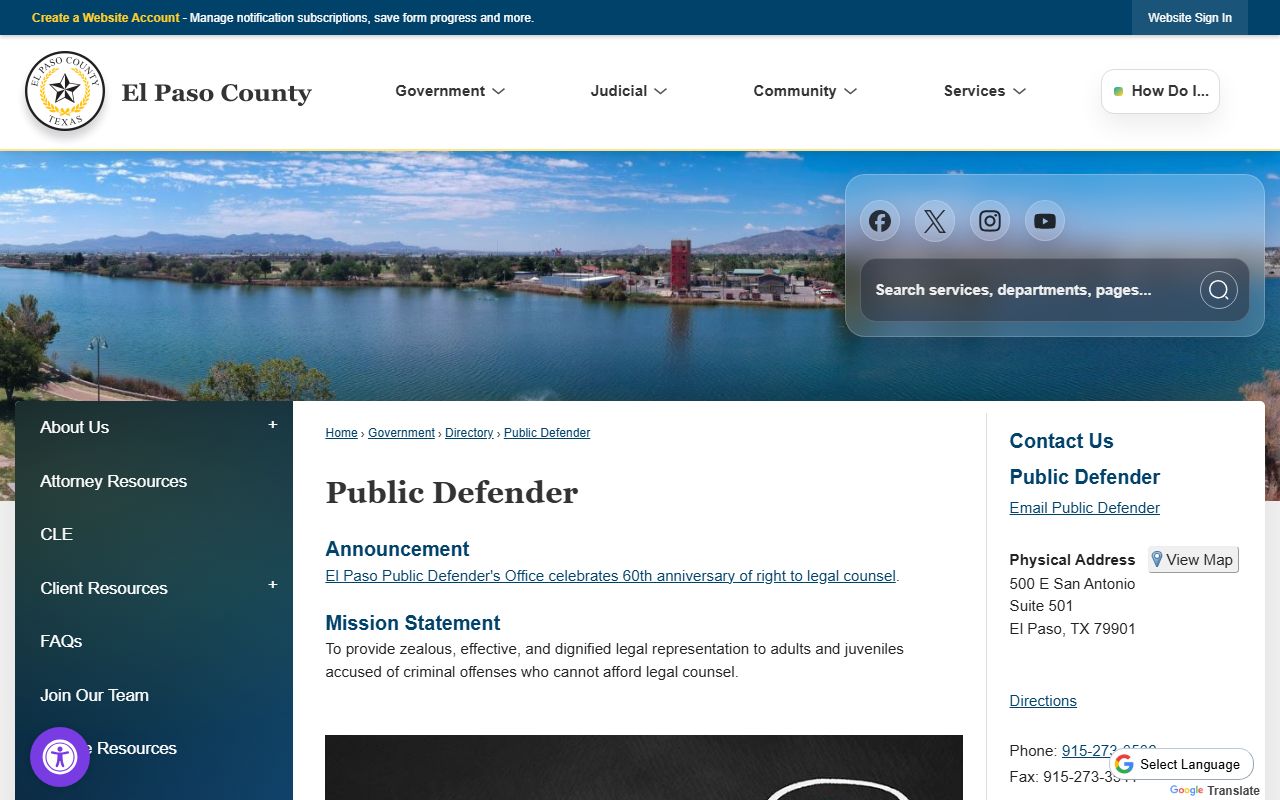
The El Paso County Public Defender office is at 500 E. San Antonio, Suite 501, and its phone is 915-273-3536. Ask for court-appointed counsel at your first court appearance if you cannot afford a lawyer.
Federal Arrests and the U.S. Marshals
Not every arrest in El Paso is a county matter. Federal arrests are handled by federal agencies and the U.S. Marshals Service, and those cases go to the U.S. District Court for the Western District of Texas, not the county.
The U.S. Marshals Western District of Texas page lists the El Paso federal courthouse. People in federal custody are tracked through the Bureau of Prisons, which is separate from the county jail and from state prison.
Restricted Criminal Records in El Paso County
Some criminal records are closed by law. Juvenile records are tightly limited under Texas Family Code Chapter 58. Sealed and expunged records drop out of public view. Active investigations, grand jury work, and confidential victim information may also be withheld. A name missing from a public search does not always mean a clean history, since the matter may be sealed, juvenile, in another county, or federal.
If you believe a public record is wrong, contact the office that holds it. Arrest data is corrected through the Sheriff or arresting agency, while court data is corrected through the clerk and the court.