
About the El Paso County Clerk
The County Clerk is an elected office, currently held by Delia Briones. The office's mission is to secure, preserve, and generate public and vital records while using technology and e-government services. It is the clerk of record for county courts at law, statutory probate matters, and the county's recording functions.
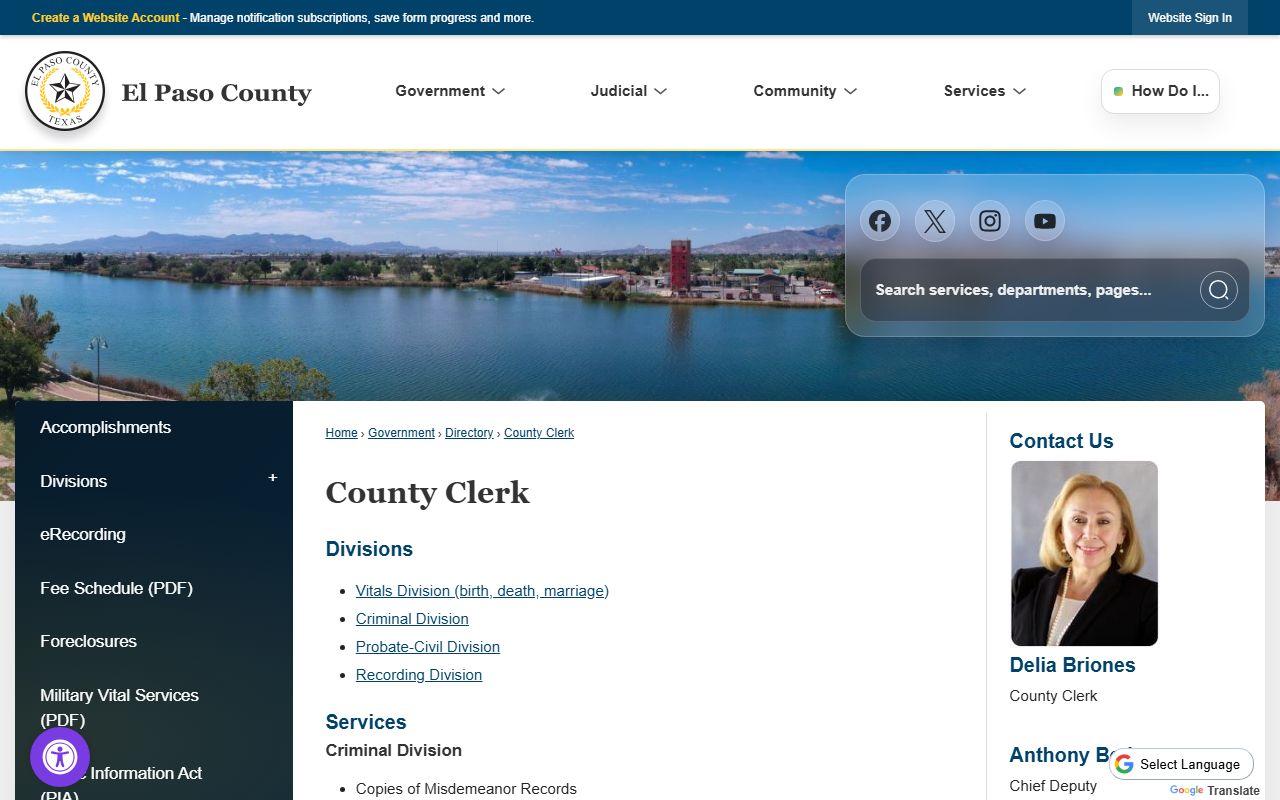
The El Paso County Clerk page lists the offices, divisions, and contacts. The main courthouse office handles most walk-in service, and the office leans on technology and e-government, from online searches to an online marriage application, while keeping the in-person and mailed service that many records still require.
El Paso County Clerk
Clerk: Delia Briones
500 E. San Antonio Ave., Suite 105
El Paso, TX 79901
915-273-3532
Mon-Fri 8 am - 5 pm
El Paso County Clerk Divisions
The County Clerk is organized into divisions, each handling a different set of records. Knowing the division you need points your request to the right desk.
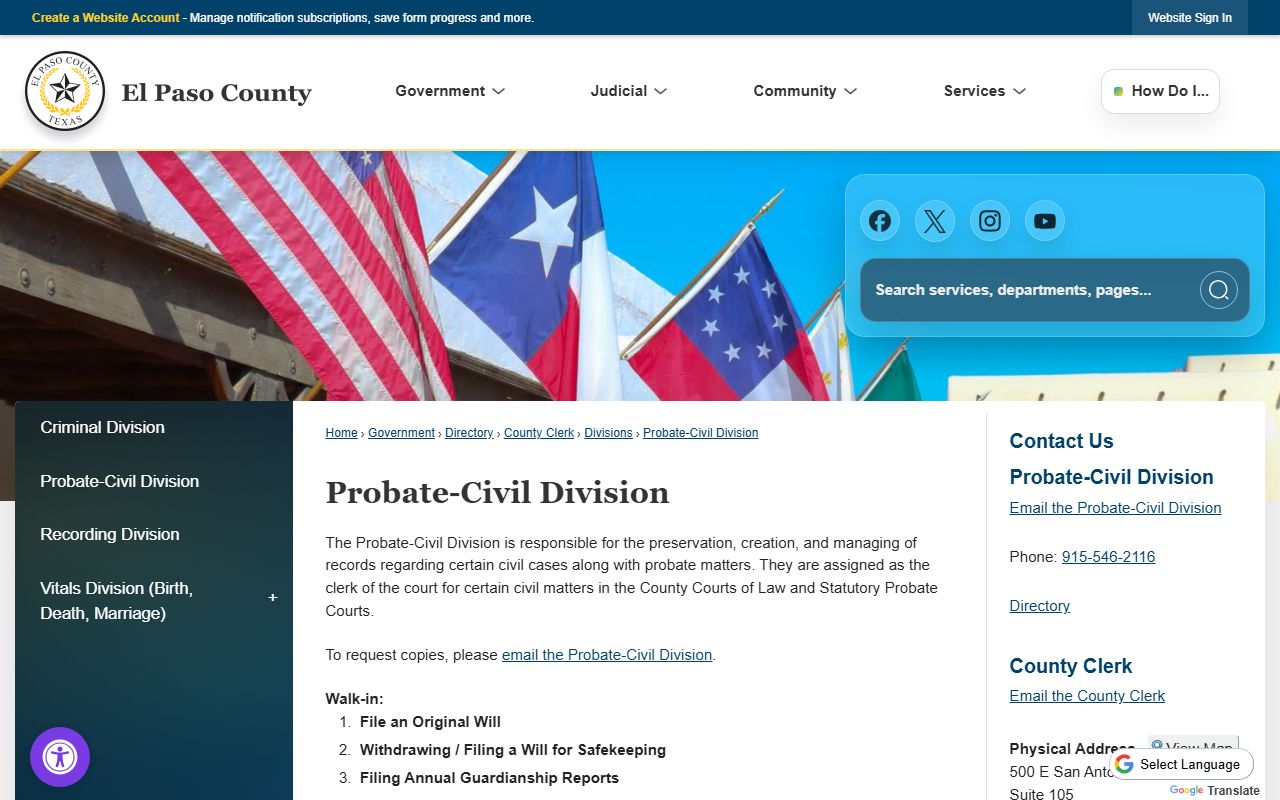
The Probate-Civil Division is one example, handling wills and guardianship paperwork. The main divisions are below.
- Vitals Division issues birth certificates, death certificates, and marriage licenses.
- Criminal Division provides copies of misdemeanor records and background checks.
- Probate-Civil Division files wills, takes guardianship reports, and issues letters.
- Recording Division records deeds, foreclosures, plats, DD-214s, brands, and assumed names.
The Probate-Civil Division deserves a special note, because it acts as the clerk for certain civil matters in the county courts at law and the statutory probate courts. It files original wills, accepts wills for safekeeping, takes annual guardianship reports, and issues letters testamentary and guardianship letters. That makes the County Clerk the filing point for probate, even though the cases are heard in the probate courts.
El Paso County Clerk Office Locations
Beyond the downtown courthouse office, the County Clerk runs annex locations and a mobile unit so people across the county can get service closer to home. Hours vary by site, so confirm before you go.
| Office | Address | Phone |
|---|---|---|
| Courthouse Office | 500 E. San Antonio Ave., Suite 105 | 915-273-3532 |
| Ysleta Annex | 9521 Socorro Road, Suite A-1 | 915-273-3468 |
| Northwest Annex | 435 Vinton Rd., Room 208, Anthony | 915-273-3517 |
| Northeast / Mobile Unit | 4641 Cohen Ave., Suite B | 915-273-3452 |
The county notes that a Mobile Clerk Unit provides in-person services at 4641 Cohen Avenue every Tuesday until further notice, which extends County Clerk service away from downtown.
Marriage Licenses and Vital Records
Most people meet the County Clerk through a marriage license or a birth or death record. The Vitals Division issues all three. A couple can start a marriage application online and finish at a County Clerk office, and Texas applies a short waiting period before the ceremony in most cases. The clerk records the license after the ceremony.
Birth and death records carry privacy limits. Certified birth records, in particular, are restricted to eligible people, so be ready to show identification and a qualifying relationship. The online index search helps confirm a record exists before you order a certified copy, which saves a wasted trip or payment.
Recording Deeds and Business Names
The Recording Division is the County Clerk's other major role. It records the documents that prove who owns property and who runs a business. Deeds, deeds of trust, liens, plats, and foreclosure notices all flow through recording. Business owners file assumed name records here, and the office also records military discharges and cattle brands.
Recording creates a public, searchable chain of title and business identity. Once a document is recorded, it becomes part of the official public record, which is why title companies, lenders, and researchers rely on the County Clerk's recorded records. The county posts an official public records search to find these documents online, and a free Property Fraud Alert can warn an owner if a monitored name is recorded.
How to Request a Certified Copy
Certified copies are the official versions an agency, court, or employer may require. The County Clerk issues certified marriage, vital, and recorded records. A clear request, sent to the right division, gets the fastest answer.
- Identify the record type and the division that holds it.
- Gather the names and dates, and a case number for probate matters.
- Request by email, in person at a County Clerk office, or by mail where allowed.
- Pay the copy and certification fee from the current schedule.
- Receive the certified copy by the method the office offers.
Which division to ask depends on the record. Marriage and vital records go to the Vitals Division. Misdemeanor copies go to the Criminal Division. Wills, guardianship letters, and probate copies go to the Probate-Civil Division, which accepts requests by email, walk-in, and mail. Recorded deeds and assumed names go to the Recording Division. Matching the request to the right division is the fastest way to a certified copy.
Records Request Details
There is no single online form for every County Clerk record, so a clear written request matters. Including the details below helps the office find and certify the right document.
| Field | Required | Notes |
|---|---|---|
| Record Type | Yes | Marriage, birth, death, probate, recorded |
| Names | Yes | Full names as recorded |
| Date | Helpful | Date of marriage, birth, or recording |
| Plain or Certified | Yes | Certified for legal use |
| Requester Contact | Yes | Email or mailing address |
El Paso County Clerk Fees
Fees cover licenses, certified copies, and recording, and they are set by the County Clerk's published schedule rather than a single flat number. The County Clerk posted a marriage license fee increase effective March 1, 2023, so confirm the current figure before you pay.
| Item | Amount |
|---|---|
| Marriage license | Per County Clerk fee schedule (raised March 1, 2023) |
| Certified vital record copy | Per County Clerk fee schedule |
| Recording fee | Per County Clerk fee schedule |
| Card payment convenience fee | Applies to online and card payments |
Note: Premarital education can lower the state marriage license fee when the statutory requirements are met, so ask about that before you pay.
Online El Paso County Clerk Searches
The County Clerk puts several record types online through the county records page. These let you check whether a record exists before you order a copy. The main searches include marriage records, birth and death indexes, assumed names, foreclosures, oaths, and official public records.
You can reach them from the county Records Search hub, or go directly to the marriage records search or the official public records search. For marriage and divorce detail, see the marriage and divorce records page, and for recording detail, see public records.
An online search is an index, not always the full document. It confirms that a record exists and gives the basic details, but a certified copy still comes from the clerk. For older records beyond what shows online, contact the office, since the historic deed index and some files predate the online tools.
County Clerk vs District Clerk
The two clerks split the county's records, and sending a request to the wrong one is the top reason a file seems missing. The County Clerk handles county-level records, while the District Clerk handles the district courts.
| Point | County Clerk | District Clerk |
|---|---|---|
| Courts Served | County courts at law, probate | District courts |
| Criminal | Misdemeanor copies | Felony cases |
| Family and Vital | Marriage licenses, birth, death | Divorce, custody, support |
| Other | Recording, assumed names | Jury, appeals |
For the district court side, see the District Clerk page. If you are unsure which office holds a record, the county Records Search hub points most searches to the right tool, and a quick call to either clerk can settle the question before you send a request. A misfiled request is the most common cause of delay.
Property Fraud Alert and Historic Records
The County Clerk has added tools many counties lack. A free Property Fraud Alert lets you register a name and get a warning if a monitored name is recorded, which helps catch deed fraud early. The office also keeps Historic Deed Index Books from 1874 to 1963 through a digitized service, which is a strong resource for genealogy and old property research.
These records sit alongside the everyday recording work. They show how the County Clerk both serves current filings and preserves the county's older records for the public.