
About the El Paso County District Clerk
The District Clerk is an elected office, currently held by Norma Favela Barceleau. The office states that it serves the judiciary and the public with integrity, professionalism, and compliance with United States and Texas law. It is the clerk of record for the district courts.
The office is organized around the work it serves: Civil, Family, Criminal, Appeals, Adoptions, Records Request, Schedule of Fees, Statutory Reports, and Forms. Each part supports a different slice of district court business, and the office sits in the downtown courthouse alongside the courts it serves.
El Paso County District Clerk
Clerk: Norma Favela Barceleau
500 E. San Antonio Ave., Suite 103
El Paso, TX 79901
915-273-3534
districtclerk@epcountytx.gov
Mon-Fri 8 am - 5 pm
What the District Clerk Does in El Paso County
The District Clerk files and keeps the records of the district courts, issues process, manages jury operations, and collects fees. District courts handle felonies, larger civil suits, family cases, and juvenile matters, so the District Clerk's files cover a wide range. The clerk is the gateway to those records.
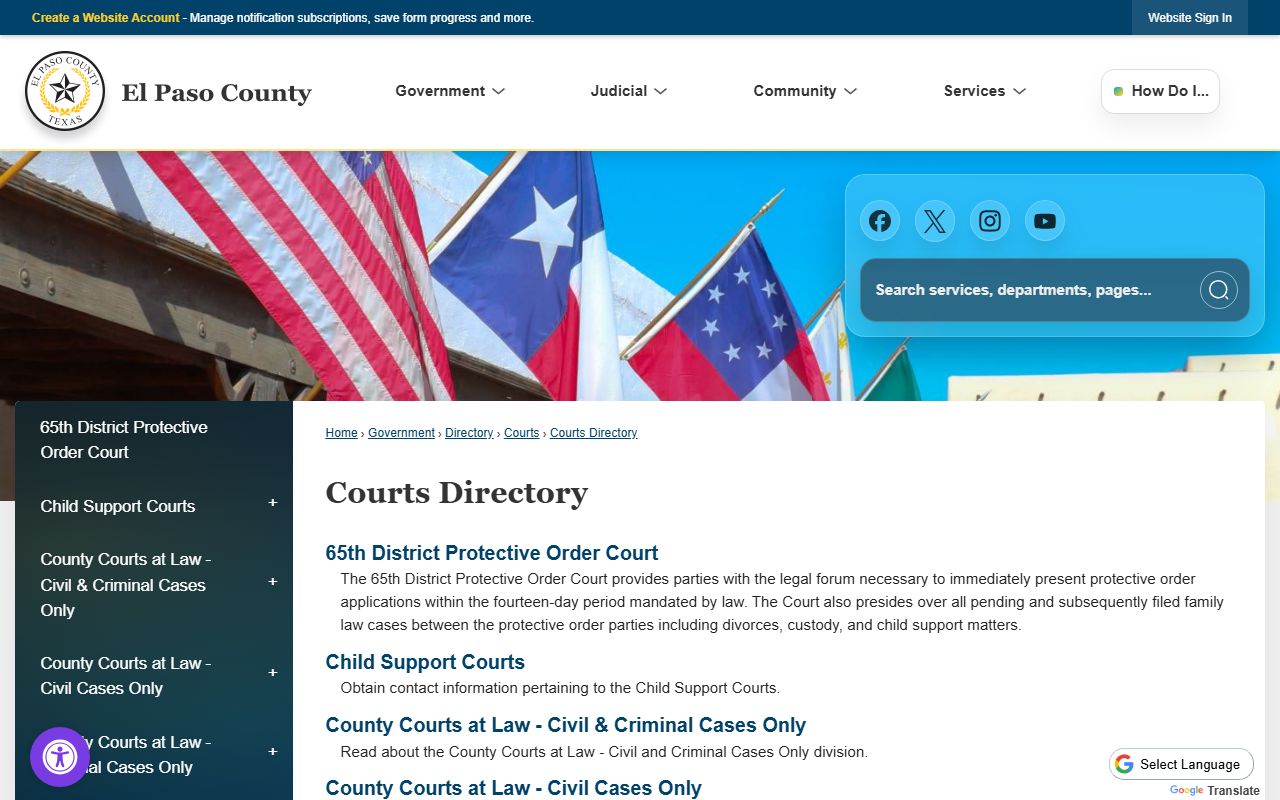
The county Courts Directory lists the district courts the clerk serves. Core duties include the following.
- File petitions, answers, motions, and orders in district court cases
- Maintain civil, family, criminal, and appellate case records
- Issue citations and other court process
- Run jury and grand jury operations for the district courts
- Collect filing fees and process payments
Because the district courts carry the county's most serious cases, the District Clerk's records can be sensitive. Felony case files, divorce records, and juvenile matters all run through district courts, and access rules differ by type. Some files are fully public, while others are sealed or confidential by statute, so the clerk follows the rule that applies to each record.
How to Request a Certified Copy
A certified copy is the official version a court, agency, or employer may require, and a plain printout will not always be accepted. The District Clerk directs copy requests to its office, and a clear request speeds the answer.
- Find the cause number and the party names for the case.
- Identify the document you need and whether it must be certified.
- Send the request to the District Clerk at districtclerk@epcounty.com, or ask in person at Suite 103.
- Pay the copy and certification fee from the current schedule.
- Pick up the copy or receive it by the method the office offers.
Certified copies matter most for legal use. A court in another case, a government agency, a bank, or an employer may require the certified version, while an uncertified printout is fine for personal reference. A background letter, which the office also provides, is a separate request and is directed to the same office email. Include enough detail to identify the exact case, since a common name alone can match more than one file.
Records Request Details
The District Clerk does not post a single fill-in form for every request, so a clear written request is what counts. Including the details below helps the office find and certify the right document.
| Field | Required | Notes |
|---|---|---|
| Cause Number | Helpful | The narrowest way to find a file |
| Party Names | Yes | Full names as filed |
| Document Type | Yes | Decree, judgment, order, or full file |
| Plain or Certified | Yes | Certified for legal use |
| Requester Contact | Yes | Email or mailing address |
El Paso County District Clerk Fees
Fees cover copies, certification, and filing, and card payments add a convenience fee. The District Clerk revised its fee schedule effective January 1, 2025 under Senate Bill 1612, so use the current schedule for exact amounts.
| Item | Amount |
|---|---|
| Credit card convenience fee | 2.50%, $2.00 minimum |
| Debit card convenience fee | $2.95 |
| Plain and certified copies | Per current District Clerk fee schedule |
| Civil filing fee | Per current District Clerk fee schedule |
Note: The District Clerk fee schedule changed on January 1, 2025, so confirm any amount marked with an asterisk against the revised schedule.
E-Filing and Self-Represented Filers
The District Clerk accepts electronic filing through eFileTexas and approved filing service providers. E-filing is the standard way attorneys file, and the office supports it for the public as well. Self-represented litigants can file petitions and pleadings through eFileTexas Self Help, and the clerk directs filers to choose a filing service provider.
Some requests still route by email. The office directs copies of court records, background letters, and Public Information Act requests to districtclerk@epcounty.com. Citation requests are e-filed with detailed information, including the requester's email, and the issued citation is emailed back.
E-filing has changed how most documents reach the court. Attorneys file electronically as a rule, and the public can use the same system. The clerk reminds filers to pick a filing service provider when using eFileTexas, since the state platform connects to the court through those providers rather than directly. Self-help filers can find guided steps through the eFileTexas Self Help option.
District Clerk vs County Clerk
The two clerks are easy to confuse, but they hold different records. Sending a request to the wrong office is the most common reason a file seems to be missing.
| Point | District Clerk | County Clerk |
|---|---|---|
| Courts Served | District courts | County courts at law, probate |
| Criminal | Felony cases | Misdemeanor copies |
| Family | Divorce, custody, support | Marriage licenses |
| Other | Jury, appeals | Recording, vital records |
For the county-level side, see the El Paso County Clerk page. A quick way to choose: if the case is a felony, a divorce, or a larger civil suit, it is almost certainly a district court matter and the District Clerk holds it. If it is a misdemeanor copy, a marriage license, a probate filing, or a recorded deed, that is County Clerk territory.
Appeals from El Paso County District Courts
When a party loses in a district court, the next step is often an appeal, and the District Clerk's Appeals function helps move the case up. Appeals from El Paso County trial courts generally go to the Eighth Court of Appeals, which sits in El Paso. The clerk prepares and transmits the clerk's record that the appellate court reviews.
An appeal is not a new trial. The higher court reviews what happened below for legal error, working from the record and the written briefs. Deadlines are strict, so a party who wants to appeal should act quickly, and ideally with a lawyer. The clerk can explain what the record includes, but it does not give legal advice on whether to appeal.
Payments, Passports, and Jury Service
The District Clerk handles more than case files. Debit and credit card payments are accepted with the convenience fees noted above. Passport services are offered by appointment only, so call ahead rather than walking in.
Jury service runs through the office too. Jury questions go to 915-273-3522, extension 2549, or to the office email. Grand jury service has a separate contact, Victor Serna, at 915-273-3545, extension 4090. Reporting instructions on a summons should be followed as written.
If you are summoned, bring the summons and a valid photo ID, and allow extra time for security screening at the courthouse. A summons that arrives for someone who has moved or cannot serve should not be ignored; call the office to ask how to respond rather than skipping the date.
Search Warrants and the Jail Magistrate
Search warrants follow a special path. The District Clerk advises that a search warrant should, when possible, carry the jail magistrate's signature, since a magistrate is on duty around the clock. Those warrants are filed with the District Clerk's office located on the first floor of the downtown jail at 601 E. Overland Avenue, and the office can be reached at 915-273-3148 for more information.
This is separate from the main Suite 103 office. For active warrants by name, see the warrant records page.
Searching District Court Records Online
Before contacting the clerk, you can often find a case yourself. District court files are searched through the county's online case search, and recorded public records have their own search tools.
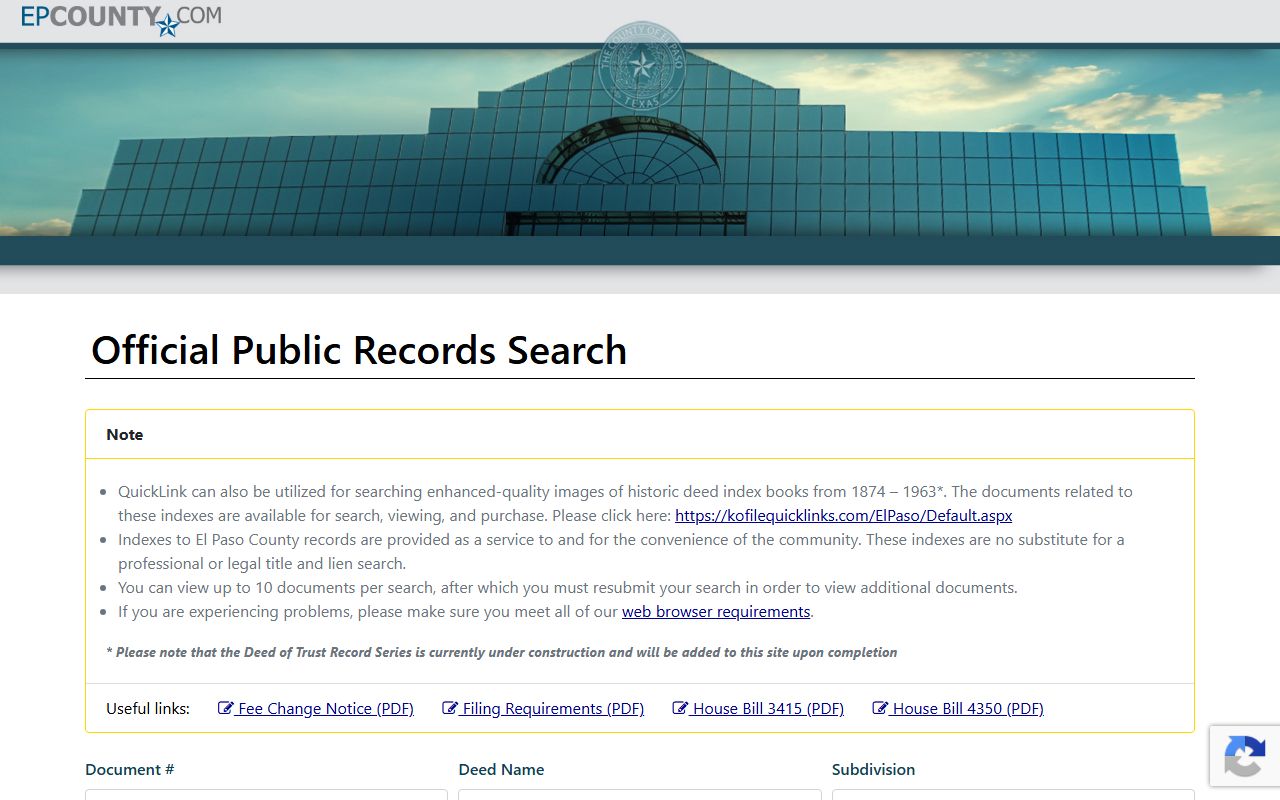
The official public records search covers recorded documents, while the case search covers court files. For the full court search walkthrough, see the court records page, which explains each search step by step.