
El Paso County Jail Roster Overview
The county links its jail tools on the official Records Search page and runs them on the same Odyssey platform as its court searches. The jail records search is labeled current jailings only, which is the county's own wording. That phrase matters. It means the tool is built to show who is in county jail now, not a complete archive of everyone ever booked. If a name does not appear, the person may have been released, transferred, booked under a variant name, or simply not yet updated online.
The roster also has limits on scope. It covers El Paso County jail custody. It does not show people in Texas state prison, in federal custody, or held by immigration authorities. For those, you need the state or federal locators covered on the released inmates page.
The system is large. County material notes the detention operation booked more than 400,000 individuals over a recent decade, an average near 40,000 a year. That volume is one reason the county keeps a quick online roster for current custody and routes older or detailed requests back to the facility or the courts.
How to Use the El Paso County Inmate Roster
The jail records search lives on the county's El Paso County Records Search hub. Open the jail records search, choose how you want to search, and complete the security check before results load.
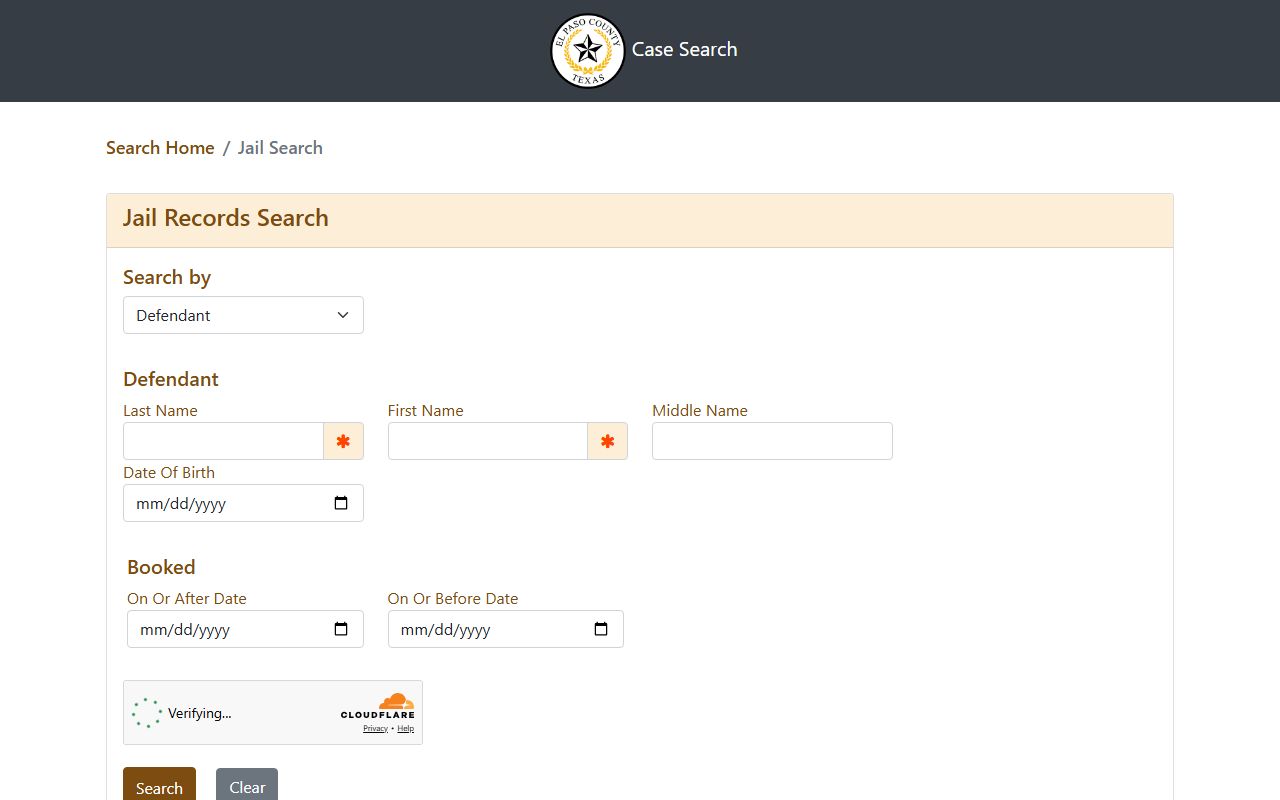
- Open the jail records search from the Records Search hub.
- Set the Search By method to Defendant or Booking Number.
- Enter a last and first name, or the booking number if you have it.
- Add a date of birth or a booking date range to narrow common names.
- Finish the security check, run the search, and open a match for more detail.
If you cannot find a person you expect to be in custody, do not assume the worst. Try a variant spelling, use Soundex-style alternates, or call the facility directly to confirm.
Common-name searches need extra care in El Paso, a large border county where many people share last names. When a search returns several people, use the date of birth and the booking date range to narrow it. If you still cannot tell people apart, the booking number is the surest match, and the facility can confirm a person by phone.
El Paso County Jail Roster Search Fields
The jail records search uses a small set of fields. You search either by defendant name or by booking number, and the rest of the fields help cut down a long list. The search will not run until the security check is done.
| Field Label | Type | Required | Notes |
|---|---|---|---|
| Search By | Dropdown | Yes | Defendant or Booking Number |
| Booking Number | Text | When Search By Booking Number | The custody identifier |
| Defendant Last Name | Text | In Defendant mode | Required with first name |
| Defendant First Name | Text | In Defendant mode | Required with last name |
| Date of Birth | Date | No | Narrows common names |
| Booked On or After / Before | Date | No | Filters by booking date |
What an El Paso County Inmate Record Shows
The roster is built around the same keys you can search on. Because the portal runs a live security check before results load, the exact profile layout is confirmed only after a real search. For that reason, this page does not promise a mugshot, a housing pod, a bond figure, or a court date on the public profile. The fields below are the ones the search is designed around.
| Field | What It Shows |
|---|---|
| Booking Number | The custody identifier assigned at intake. |
| Defendant Name | Last, first, and middle name. |
| Date of Birth | Used to tell apart common names. |
| Booking Date | When the person entered custody. |
| Custody Status | Whether the person is in county jail now. |
Note: To confirm charges, bond, or a court date, call the facility, since the public roster is current jailings only and detail can be limited.
El Paso County Detention Facilities
The Sheriff's Detention Bureau runs two adult jails with a combined capacity of 2,906 inmates. Chief Deputy Patrick J. Gailey oversees detention operations, and the bureau is staffed by hundreds of detention officers. The downtown jail handles booking, magistration, and bonding, while the larger eastside Jail Annex houses much of the population.
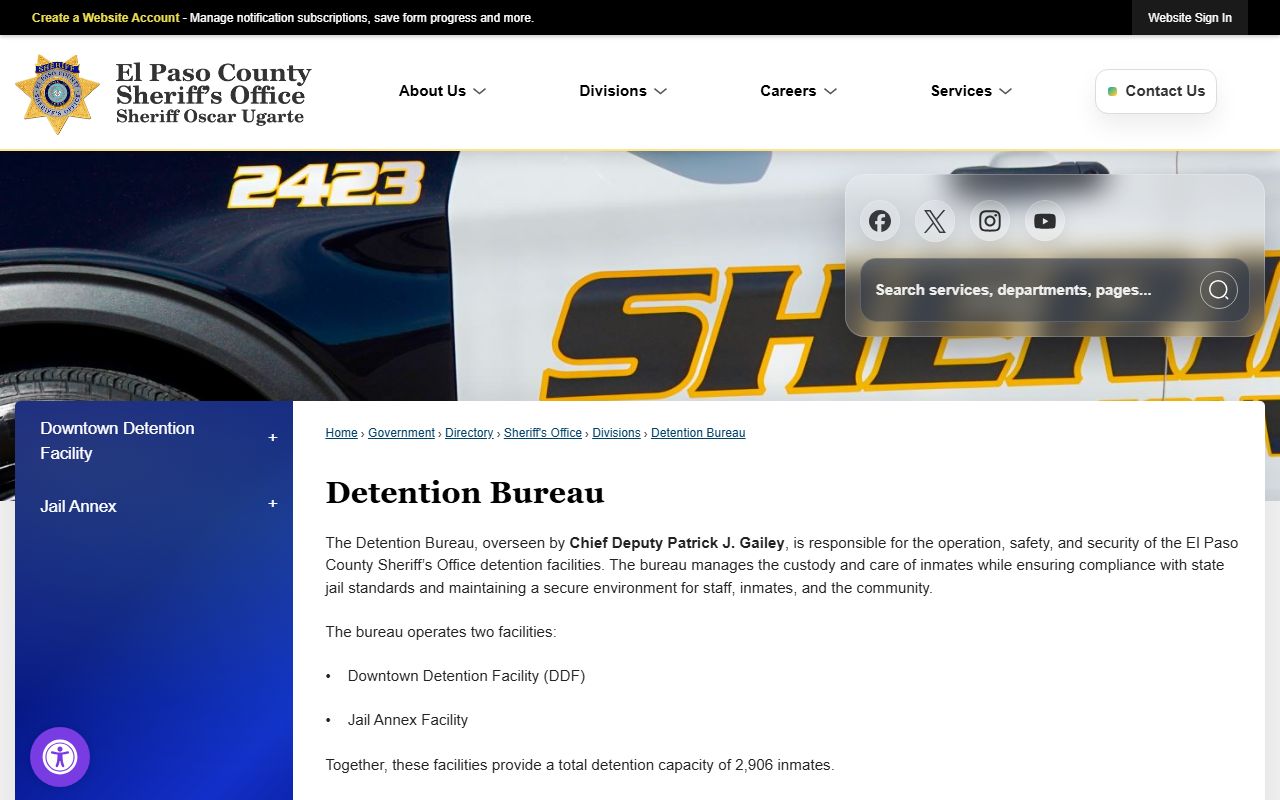
The El Paso County Detention Bureau page describes the system's capacity and staffing. The two facilities work together, with court-adjacent functions downtown and most housing at the Annex.
Downtown Detention Facility
The Downtown Detention Facility sits across from the federal, state, district, county, justice, and municipal courts, which makes inmate transport efficient. It holds up to 1,010 inmates, including 10 medical beds, across nine housing floors, one set aside for female housing. It also houses two jail magistrate courts, the Warrants Section, and bonding functions.
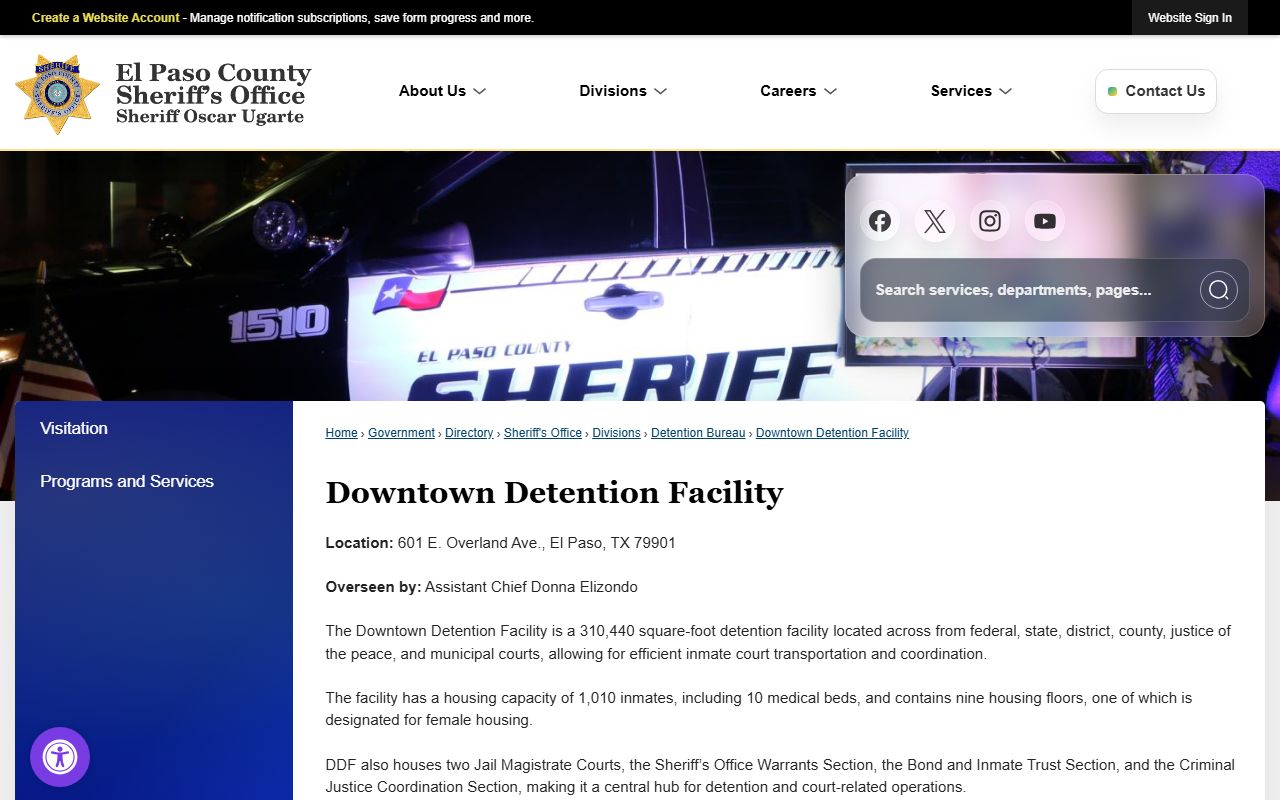
Use the contacts below for the Downtown Detention Facility.
Downtown Detention Facility
601 E. Overland Ave.
El Paso, TX 79901
Inmate Info 915-273-3770
Releasing 915-273-3768
Bonding 915-273-3767
El Paso County Jail Annex
The Jail Annex on the east side is a pod-style facility with a total capacity of 1,896, made up of 1,872 housing beds plus 24 ward and isolation beds. It has four housing units, each holding four pods, and houses a large share of the county's inmates. It is the larger of the two adult jails.
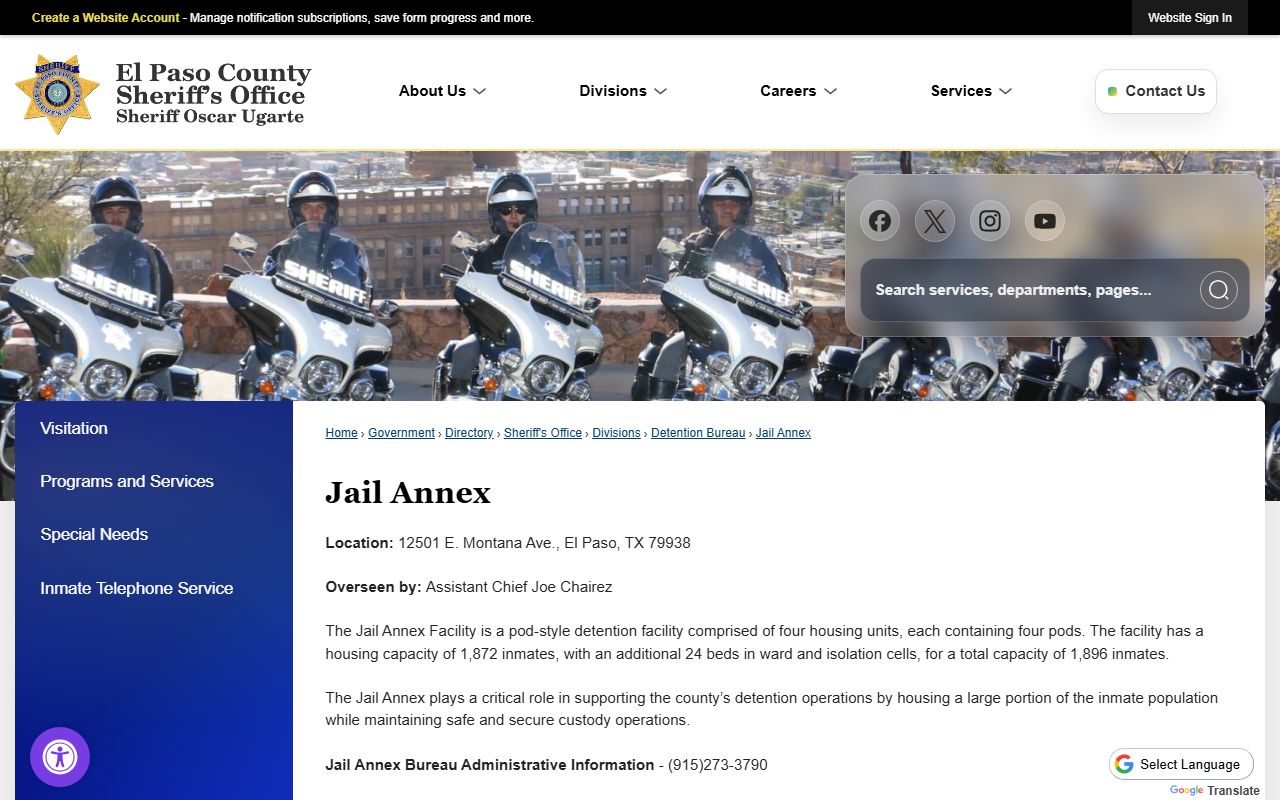
Reach the Jail Annex through its administration line.
Jail Annex
12501 E. Montana Ave.
El Paso, TX 79938
Administration 915-273-3790
Booking and Bonding in El Paso County
After an arrest, a person is booked into the Downtown Detention Facility, where intake records the booking and assigns a booking number. A jail magistrate is on duty around the clock and, because two magistrate courts sit inside the jail, can review the case, give warnings, and set or review bond soon after booking.
At intake, staff record identity, take a booking photo, and classify the person for housing based on factors like the charge and safety needs. Classification decides which facility and unit a person goes to, which is why a name can move between the Downtown facility and the Jail Annex during a stay.
Bond is the security or promise that allows release while a case is pending. Family or a bondsman can post bond through the Downtown bonding line at 915-273-3767, and questions about a release go to the releasing line at 915-273-3768. A release can follow a posted bond, a judge's order, a completed sentence, a dismissal, or a transfer to another agency.
The county also runs a separate jail bond records search for bond details, listed alongside the jail records search on the records hub.
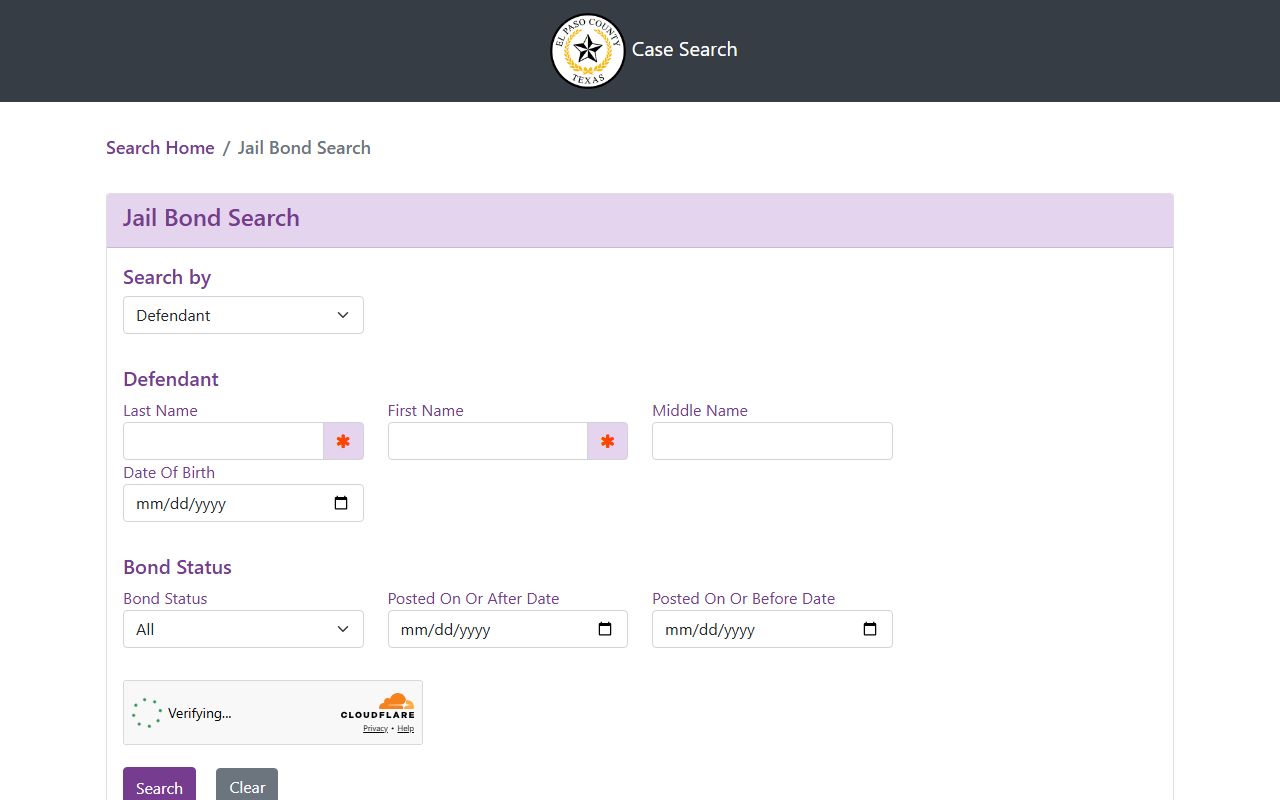
Use the jail bond records search when you need bond information rather than the basic custody status the roster shows.
Jail Records vs State and Federal Custody
The county roster is only one of three custody systems. County jail covers local custody, usually pretrial detention or a short county sentence. State prison custody is tracked by the Texas Department of Criminal Justice. Federal custody is tracked by the Bureau of Prisons. A person can move from the county jail to state prison after a conviction and sentence.
If the county roster does not show someone, check whether they were transferred. The released inmates page explains how to use the state and federal locators and how to set up custody-status alerts.
The state and federal tools use their own keys. The Texas Department of Criminal Justice search uses a TDCJ number, an SID number, or a name. The Bureau of Prisons locator uses a register number or a name and covers federal inmates from 1982 to the present. The Bureau warns that a release date can change after a sentence is recalculated, so confirm custody rather than assuming a posted date is final.
El Paso County Inmate Programs
The Detention Bureau runs more than custody. Its best-known program is PAWS in Detention, where inmates care for animals, clean and feed kennels, and help train dogs. The county notes the kennel was built by inmates, for inmates, using inmate-generated funds and inmate labor. Donation drop-off points include the Jail Annex, the Downtown facility, and Sheriff's headquarters.
Inmates can also work toward a GED, take ESL classes, and build job-readiness skills. Programs like these aim to lower the chance a person returns to jail after release. For help after release, the released inmates page lists reentry and legal-aid resources in El Paso County.
How to Contact an El Paso County Inmate
The county uses outside vendors for inmate communications. The official inmate telephone page lists three service channels, one for calls and video, one for commissary gifts, and one for special meals. These are paid services run by private providers, not the Sheriff's Office. Costs and account setup vary by vendor, so check each provider's site for current rates before you add money or schedule a visit.
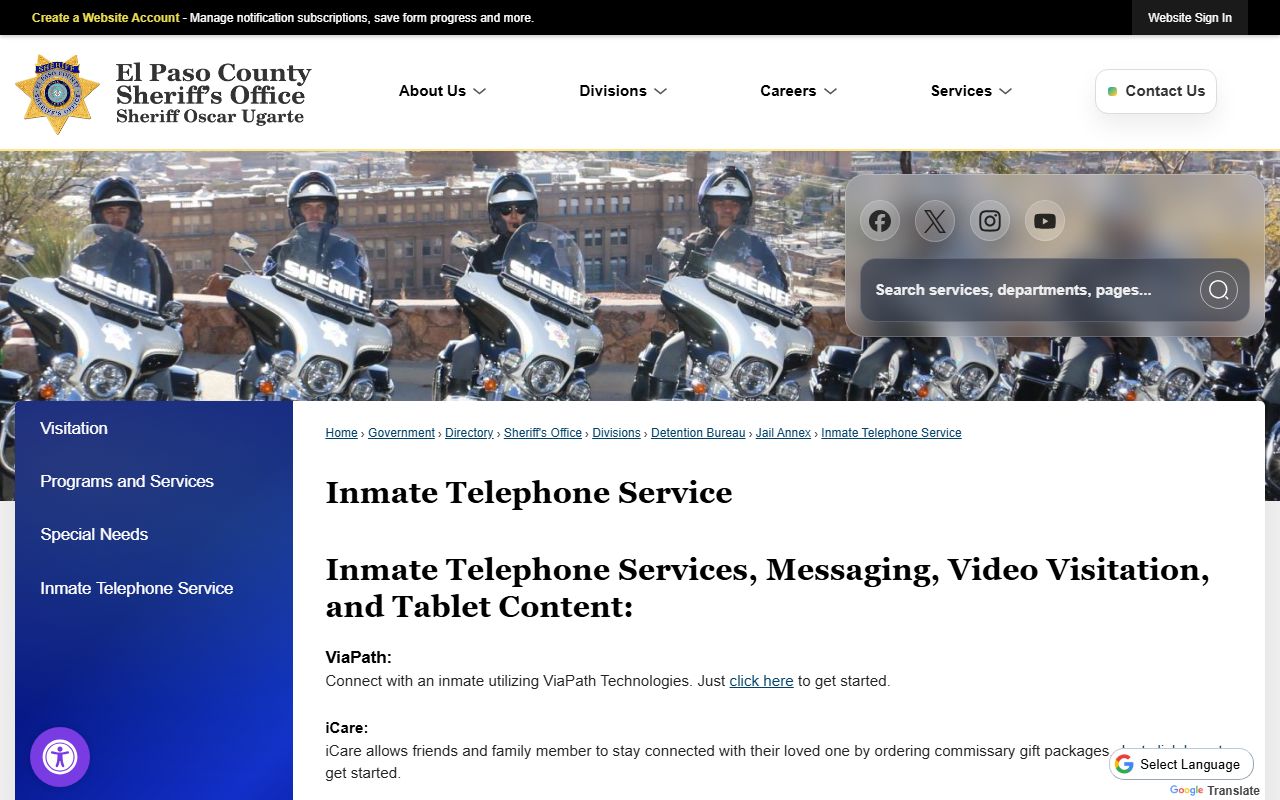
ViaPath handles phone, messaging, video visitation, and tablet content for county inmates.

The El Paso County inmate telephone service page links each vendor. The table below lists the documented channels.
| Service | Provider | How to Access |
|---|---|---|
| Phone, messaging, video visits, tablet | ViaPath | my.viapath.com |
| Commissary gift packages | iCare | icaregifts.com |
| Special meals and gift baskets | Outside Inside | outsideinside.com |
Visitation Rules in El Paso County
Video visitation runs through ViaPath, the same vendor that handles phone and messaging. The county routes visitors to that service for remote visits. In-person visitation rules, including the schedule, dress code, ID requirements, and child-visitor rules, change over time and are not published in the pages reviewed here.
Because those rules can change, verify the current visitation schedule and requirements with the facility before you go. Call the Downtown Detention Facility inmate information line at 915-273-3770 or the Jail Annex administration line at 915-273-3790 to confirm, rather than relying on an old schedule.
Plan ahead either way. Set up a ViaPath account before a scheduled video visit, bring valid government identification for any in-person visit, and expect security screening at the door. Rules differ for attorneys, who generally have separate visitation access from family and friends.
What Information May Be Restricted
The jail roster leaves some information out by design. Sealed matters, juvenile detainees, and confidential records are not public the way an adult booking is. Details that could risk safety or an active investigation may be withheld. The roster also does not replace a court file, so charges and dispositions are confirmed through the court, not the jail.
Juvenile detention is a separate system. The county runs a short-term juvenile detention center for youth ages 10 to 17, with a small capacity and around-the-clock operation. Visitation there is limited mainly to parents, guardians, and attorneys, who must show government identification, and recording-capable devices must be stored in lockers. Treat juvenile custody as confidential unless you have a right of access. When in doubt about what the roster does or does not show, a call to the facility is the most reliable way to confirm a person's status.