
How to Search El Paso County Court Records
El Paso County keeps its public case lookups in one place. The official records hub links separate tools for civil, family, and probate cases, criminal cases, jail records, jail bond records, warrants, and marriage records. There is no single all-in-one database. You pick the search that matches the record you want, then enter what you know. The county runs these tools on the Odyssey public case search platform.
Start at the county's El Paso County Records Search page. It points to every public search the county offers.
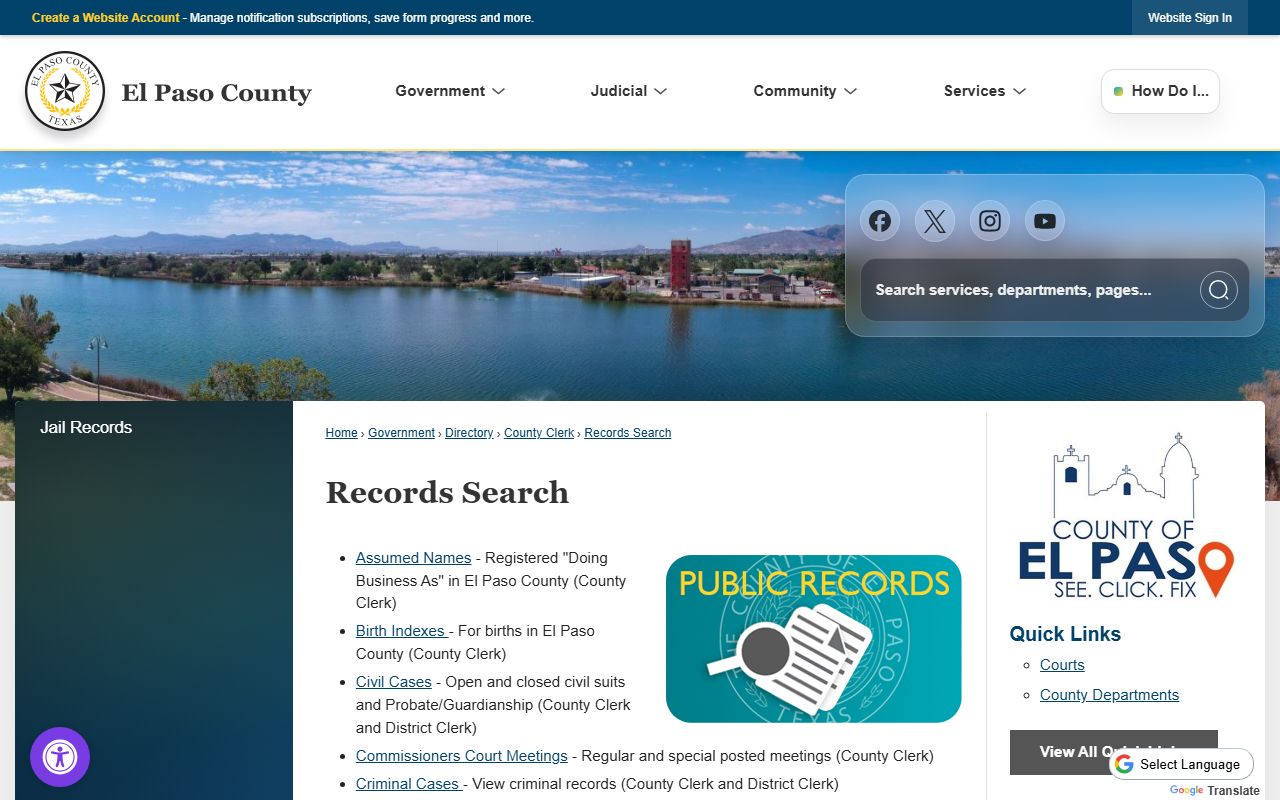
From this hub you choose civil cases for family, probate, and civil suits, or criminal cases for misdemeanor and felony matters. Have a name spelled the way it appears on an ID, and a case number if you have one.
- Open the Records Search page and pick the right tool for your record type.
- Choose a search method first, such as Case, Party, Defendant, Business, Attorney, or Citation.
- Enter a case number when you have it, since that is the narrowest search.
- For a name search, type both last and first name, and add a date of birth or date range to cut down common-name matches.
- Check the Soundex box if the spelling may vary.
- Finish the security check and click Search, then open the matching case to read its docket.
The Odyssey public case search screen is where each of these searches lives.
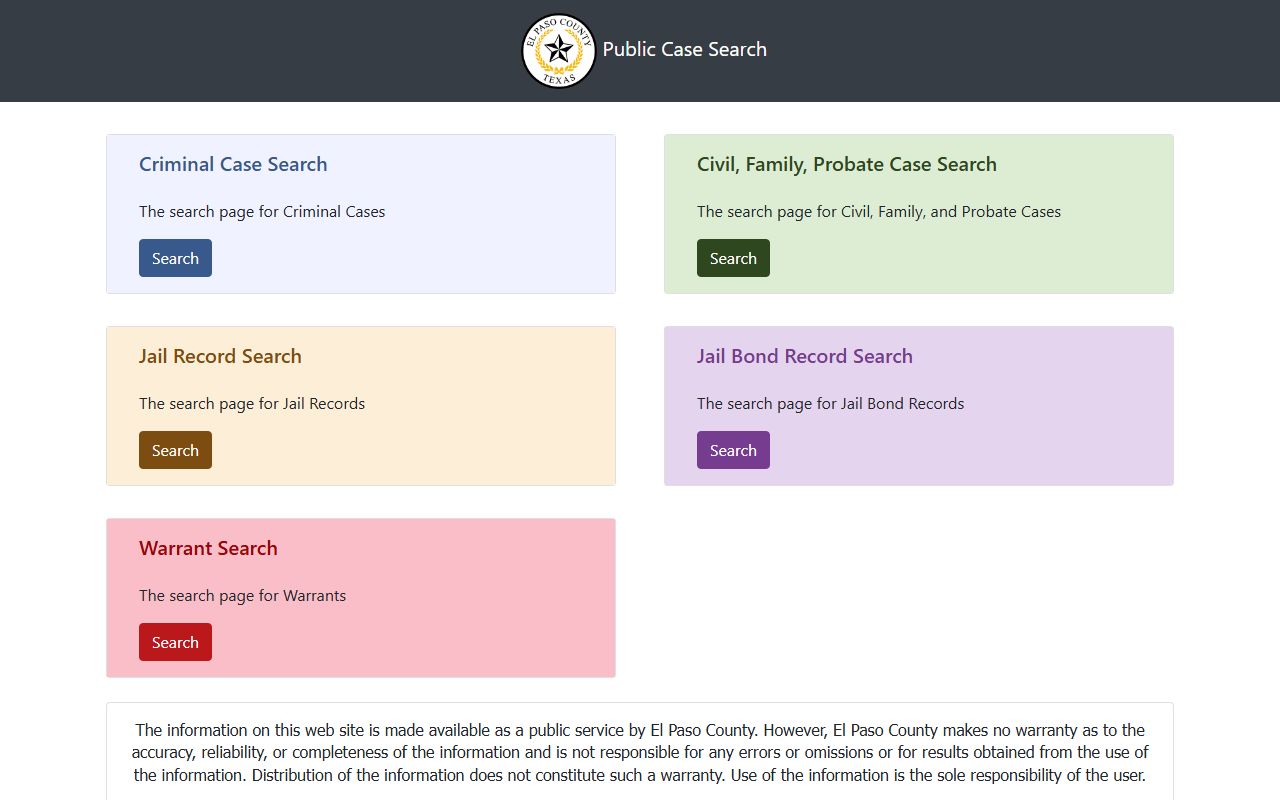
Each portal shows a Cloudflare security check before it runs. That step blocks bots, so a live human has to finish it before results load.
The El Paso County Judicial System
Texas uses a layered court system, and El Paso County reflects all of it. District courts are the main trial courts of general jurisdiction. They hear felonies, larger civil suits, family cases, and juvenile matters. County courts at law take many misdemeanors and mid-level civil and family cases. Two statutory probate courts handle wills, estates, and guardianships. Justice of the peace courts cover small claims, evictions, and Class C citations, while the City of El Paso Municipal Court handles city ordinance and parking matters.
Texas is unusual at the top. It splits its highest court in two. The Supreme Court of Texas is the last word on civil and juvenile cases, and the Court of Criminal Appeals is the last word on criminal cases. Appeals from El Paso County trial courts usually go first to the Eighth Court of Appeals, which sits in El Paso.
Case flow: Justice Court › County Court at Law › District Court › Eighth Court of Appeals › Supreme Court of Texas or Court of Criminal Appeals
| Court | Jurisdiction | Case Types |
|---|---|---|
| District Courts | General trial court | Felonies, larger civil suits, divorce and family, juvenile |
| County Courts at Law | Statutory county court | Misdemeanors, mid-level civil, some family cases |
| Probate Courts 1 and 2 | Statutory probate | Wills, estates, guardianships, mental health commitments |
| Justice of the Peace | Limited jurisdiction | Small claims, evictions, Class C citations |
| Municipal Court | City court of record | City Class C misdemeanors, parking citations |
The same statutory framework that creates these county-level courts is set out in Texas Government Code Chapter 25. It explains why El Paso County has county courts at law and probate courts that sit apart from the district courts. For a fuller roster, see the El Paso County District Court page.
Types of Court Records in El Paso County
El Paso County court records fall into a few broad groups, and each group is searched in its own tool. Civil files include contract disputes, injury suits, property cases, and appeals from justice courts. Criminal files run from county misdemeanors like DWI and theft up to felonies in the district courts. Family files cover divorce, child support, custody, protective orders, and adoptions. Probate files hold wills, estates, and guardianships.
Which clerk keeps the record depends on the court. The District Clerk holds district court files. The County Clerk holds misdemeanor, probate-civil, marriage, and recording records.
- Criminal records live in the county and district systems, searched through the criminal case tool.
- Civil records include suits, judgments, and justice-court appeals.
- Family and divorce records sit in the family district courts and are searched in the civil, family, and probate tool.
- Probate records are heard in the two statutory probate courts.
- Traffic records split across county justice courts and the city municipal court.
What El Paso County Court Records Show
Most El Paso County court records share a core set of fields. A case opens with a cause number, the Texas term for a case number. It lists the parties, the case type, the filing date, and a running docket of every motion, order, hearing, and ruling. Criminal files add charge details, bond, plea, and disposition. Civil and family files add petitions, answers, temporary orders, and final judgments.
| Field | What It Shows |
|---|---|
| Cause Number | The case identifier; the best key for a clean search. |
| Filing Date | When the case was opened with the clerk. |
| Parties | Plaintiff, defendant, petitioner, or respondent names. |
| Charges / Cause | The offense in a criminal case or the claim in a civil case. |
| Disposition | The final result, such as guilty, dismissed, or judgment. |
| Sentence / Judgment | The penalty or award the court ordered. |
Some fields are never shown to the public. Social Security numbers, driver license numbers, financial account numbers, and the identities of minors are redacted by rule. Whole categories of files, such as juvenile and adoption cases, are closed.
Note: Online case data can lag the paper file, so confirm a disposition or a date with the clerk before you rely on it.
Public Access Laws for El Paso County Records
Texas treats government records and court records as two different things. The Texas Public Information Act in Government Code Chapter 552 covers county offices like the sheriff and the clerk's administrative files. The Texas Judicial Branch states that courts themselves are not subject to that Act or to the federal FOIA. Court case files are governed instead by court rules, statutes, common law, and sealing orders. That split matters in El Paso County, because a sheriff report and a district court docket follow different access paths.
Key Statutes:
Texas Government Code Chapter 552 sets the policy that people may see government records unless a law says otherwise.
Code of Criminal Procedure Chapter 55A governs expunction, the order that can destroy qualifying criminal records.
Government Code Chapter 411 controls criminal history records and orders of nondisclosure.
For court records, the Texas Judicial Branch open records policy points non-case judicial records to Rule of Judicial Administration 12. Sealing of civil court records runs through Texas Rule of Civil Procedure 76a, which requires notice and a hearing.
Records That Are Restricted or Confidential
Not every El Paso County court record is open. Juvenile records are tightly limited under Texas Family Code Chapter 58. Adoption files, CPS cases, and many mental health commitments are confidential by statute. Grand jury work is secret. Civil files can be sealed only after the high showing that Rule 76a demands. Expunged criminal records are returned or destroyed, and records under an order of nondisclosure are hidden from most public searches.
To view a sealed file you usually need standing and a court order. A party, an attorney, or someone with a legal interest files a motion in the court that holds the case. The judge weighs the request against the rule or statute that closed the record. Self-represented filers can get forms and guidance from the law library and from TexasLawHelp.
Specialty Courts in El Paso County
El Paso County runs several problem-solving courts that the main directory lists. The DWI Drug Court Intervention and Treatment Program works to cut repeat alcohol and drug offenses through supervised treatment and case management rather than punishment alone. The El Paso Veterans Treatment Court coordinates treatment, supervision, and court monitoring for eligible veterans.
The 65th District Protective Order Court gives victims a fast forum to present a protective order application within the fourteen-day window the law sets. It then keeps the related family cases, like divorce and custody, between the same parties. Title IV-D child support courts and family associate judges handle the county's high-volume support and family dockets. The county's full directory is online at the El Paso County Courts Directory.
El Paso County Sheriff and Jail
The El Paso County Sheriff's Office, led by Sheriff Oscar Ugarte, runs the county's two adult jails through its Detention Bureau. The Downtown Detention Facility at 601 E. Overland Avenue holds up to 1,010 inmates and houses two jail magistrate courts, the Warrants Section, and bonding functions. The Jail Annex at 12501 E. Montana Avenue holds 1,896. Combined capacity is 2,906. The non-emergency Sheriff line is 915-546-2280.
Jail and warrant data are searched apart from court case files. Use the El Paso County inmate records page for the jail roster and facility details, and the warrant records page for active warrants. The county labels its jail tool as current jailings only, so it is not a full historical archive.
Marriage, Divorce, and Probate Records
The County Clerk issues marriage licenses and keeps marriage records, while divorce is a family district court matter searched in the civil, family, and probate tool. Probate runs through the two statutory probate courts and the County Clerk Probate-Civil Division. See the marriage and divorce records page and the probate records page for the full process and forms.
- Testator
- The person who makes a will.
- Executor
- The person named to carry out a will, proven by letters testamentary.
- Guardian
- A person the court appoints to care for a minor or an incapacitated adult.
El Paso County Court Records Fees
Searching the county portals is free. Fees show up when you pay a fine, file a case, or order copies. The District Clerk and County Clerk each post a current fee schedule, and the District Clerk schedule was revised on January 1, 2025 under Senate Bill 1612. Card payments carry a convenience fee.
| Item | Amount |
|---|---|
| District Clerk credit card convenience fee | 2.50%, $2.00 minimum |
| District Clerk debit card convenience fee | $2.95 |
| Plain and certified copies | Set by the current clerk fee schedule |
| Marriage license | Per County Clerk fee schedule (raised March 1, 2023) |
Per-page copy and certification fees are not flat across every office, so check the posted schedule for the District Clerk or County Clerk before you send a copy request.
How to Interpret El Paso County Court Records
Court dockets use shorthand, and reading it wrong leads people astray. The biggest trap is treating a charge as a conviction. A charge is only an accusation. A conviction is a finding or plea of guilt entered by the court. A case can also end in a dismissal, an acquittal, or deferred adjudication, and each carries a very different meaning. Look at the disposition line, not just the charge line.
A few Texas terms come up often. A capias is an arrest writ issued after an indictment or a failure to appear. A capias pro fine collects an unpaid fine in a fine-only case. Community supervision is the Texas name for probation. When a docket entry is unclear, the clerk who holds the file is the right place to ask.
Federal Cases in El Paso County
Federal cases are not in the county portal. El Paso sits in the U.S. District Court for the Western District of Texas, and its El Paso Division hears federal civil and criminal matters. Federal records are searched through PACER, not the county clerk.
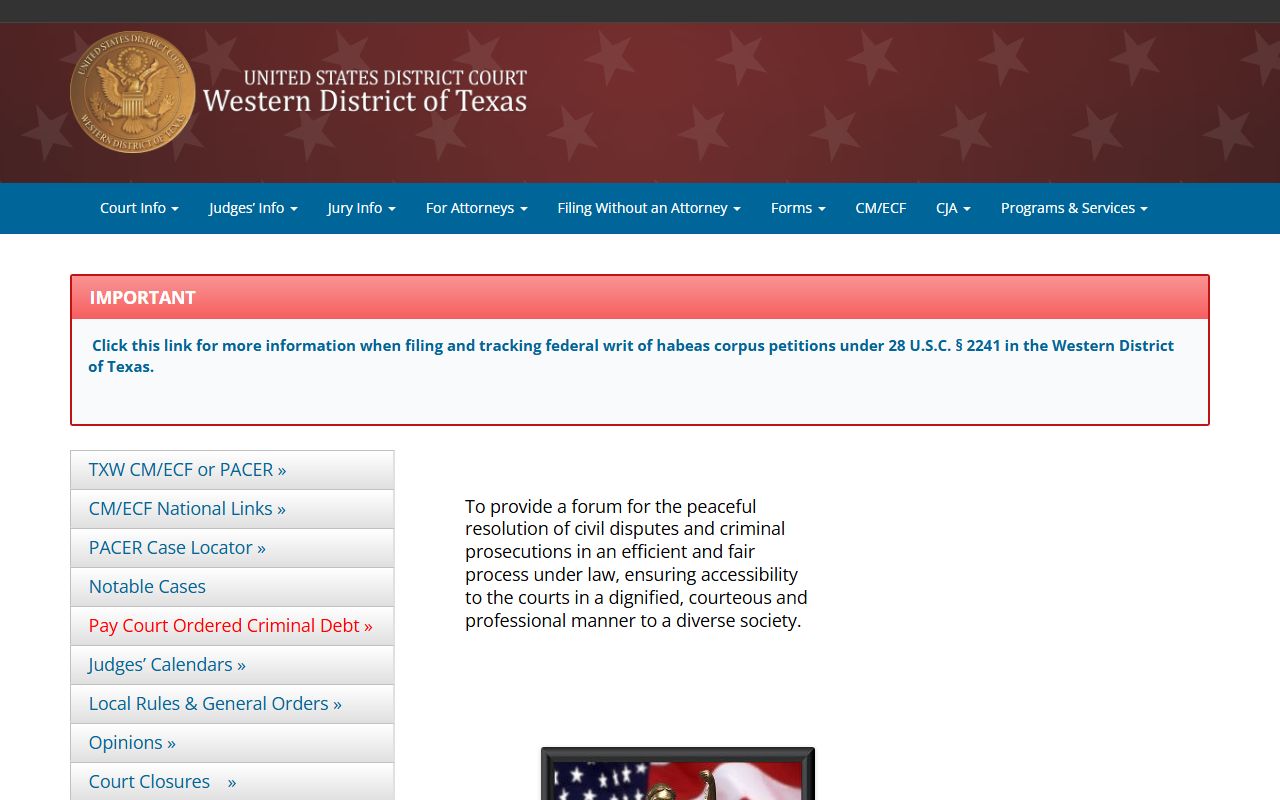
The federal courthouse is the Albert Armendariz, Sr. United States Courthouse at 525 Magoffin Street. Federal appeals go to the Fifth Circuit, and federal inmates are tracked through the Bureau of Prisons, separate from the county jail and from state prison. For more on federal access, see the court records page.
Accuracy and Record Limitations
Online records are a convenience, not the official file. The county updates its systems on its own schedule, and a new filing, a paid fine, or a cleared warrant may not show right away. Names can be entered with variant spellings, and a common name can return more than one person. The safe move is to confirm anything important with the office that holds the record.
Note: Before you act on an online result, confirm the case number, party, and disposition with the District Clerk or County Clerk who keeps the file.
History of El Paso County Courts
El Paso County is the westernmost county in Texas, set up in March 1850 with San Elizario as the first county seat. The downtown courthouse was renamed the Enrique Moreno County Courthouse on October 27, 2021, for a longtime El Paso attorney. The county law library, the Hon. Robert J. Galvan Law Library, dates to May 23, 1950 and still serves the bench, bar, and public.
The federal courthouse nearby has its own long story.
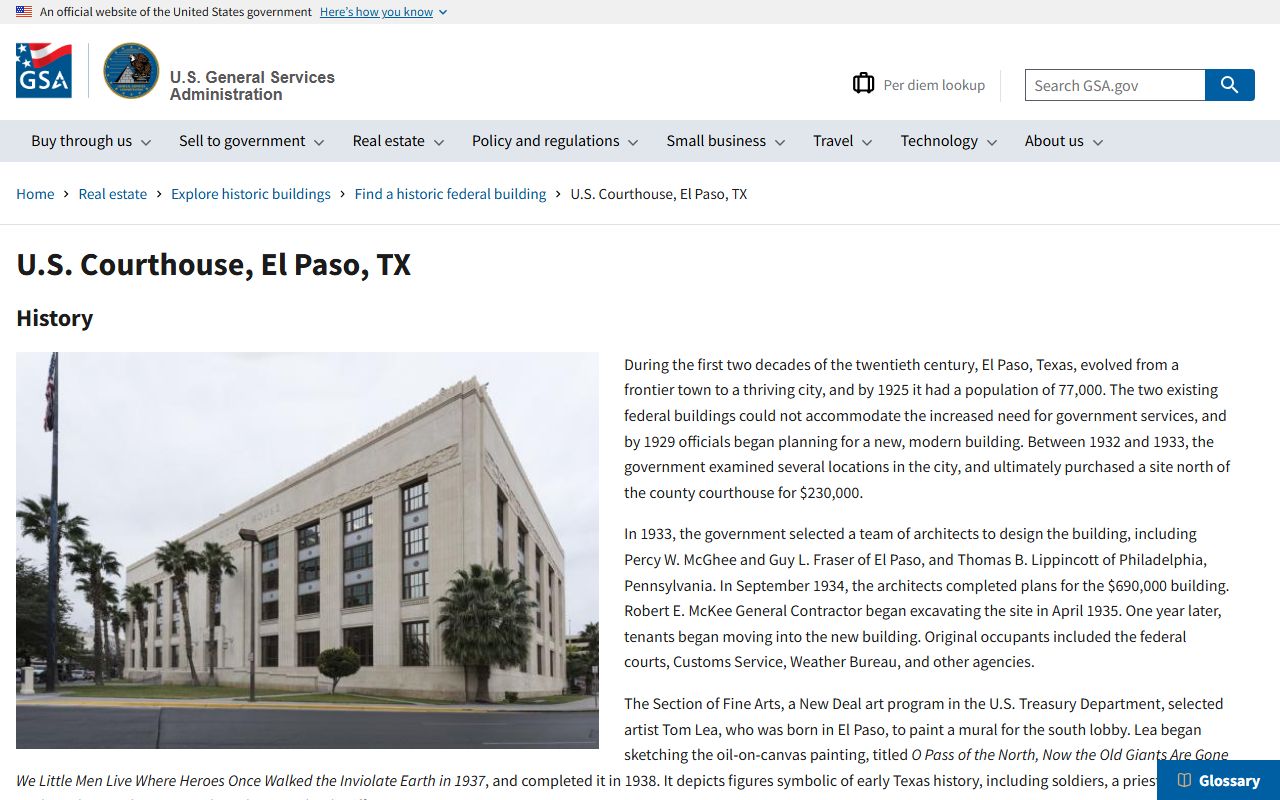
The U.S. General Services Administration history of the El Paso U.S. Courthouse notes that the building rose in the mid-1930s as El Paso grew from a frontier town into a city. Today county, federal, municipal, and detention functions cluster in a tight downtown legal district.
Self-Help and Legal Aid in El Paso County
People without a lawyer have real options in El Paso County. The Hon. Robert J. Galvan Law Library on the twelfth floor of the courthouse is a public legal research center, and its phone is 915-273-3699. It is open to anyone who needs to read statutes, rules, and forms.
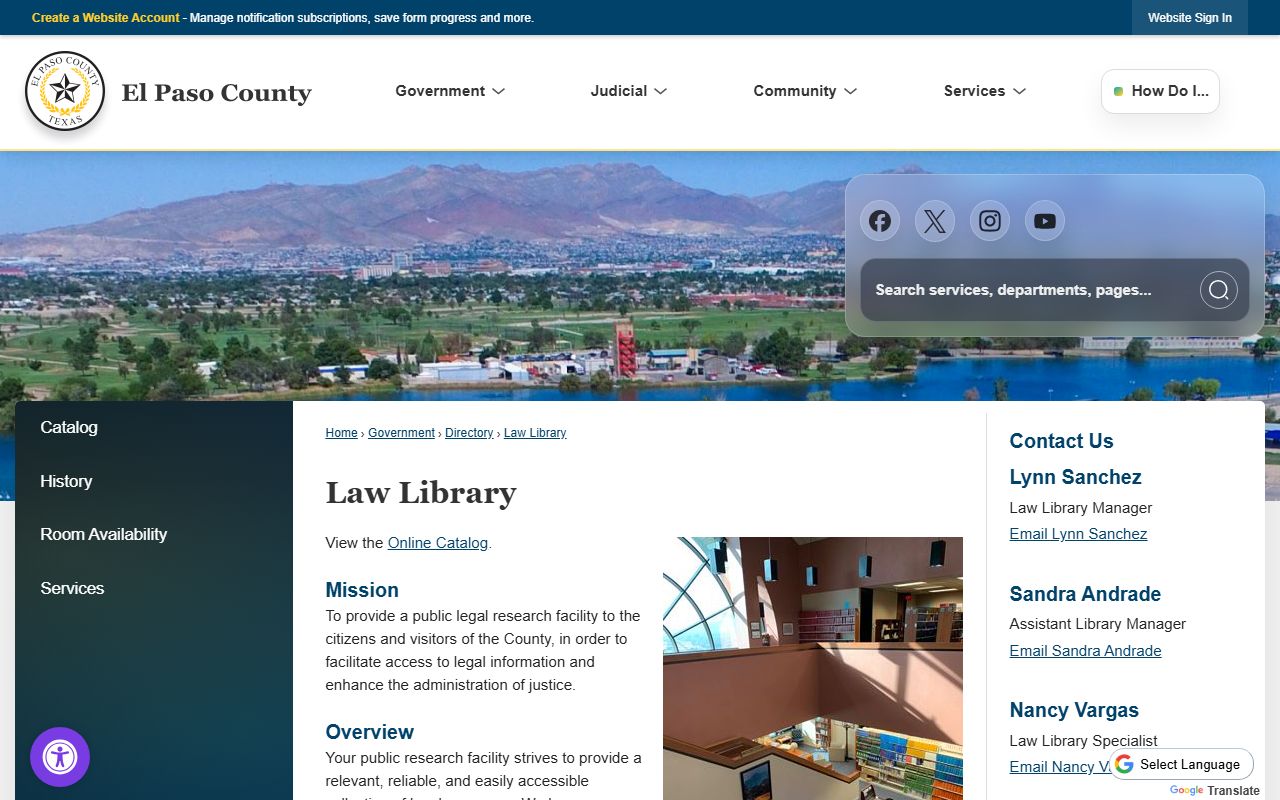
The El Paso County Law Library sits inside the courthouse complex, which makes it easy to use on a court day. For free civil legal help, Texas RioGrande Legal Aid serves low-income residents, and the El Paso Bar Association Lawyer Referral Service can match you to a private attorney. The District Clerk also lets self-represented filers e-file through eFileTexas Self Help.
Frequently Asked Questions
How do I search El Paso County court records?
Use the official Records Search page and pick the tool that fits your record. Civil, family, and probate cases use one search; criminal cases use another. Jail records, jail bond records, warrants, and marriage records each have a separate link. Search by case number when you can, or by name with a date of birth to narrow the list.
Are El Paso County court records free?
The search forms are free to use. Viewing some results, ordering copies, or buying certified documents can cost money. Older records and full case copies may need an email request, an in-person visit, or a fee paid to the clerk who holds the file.
Which clerk has my record?
The District Clerk keeps district court files. The County Clerk keeps misdemeanor copies, probate-civil records, marriage licenses, vital records, and property recordings. If you are not sure, start at the Records Search page or email the clerk's office. The FAQ page covers more of these questions.