
El Paso County District Courts Overview
Texas district courts are the trial courts of general jurisdiction. In El Paso County they handle felony criminal cases, civil suits above the lower-court limits, family matters like divorce and custody, and juvenile cases. The county runs many numbered district courts, and most are grouped by case type so similar work stays together. As courts of general jurisdiction, district courts can hear almost any matter not reserved to a lower court, which is why the most serious and highest-value cases land here.
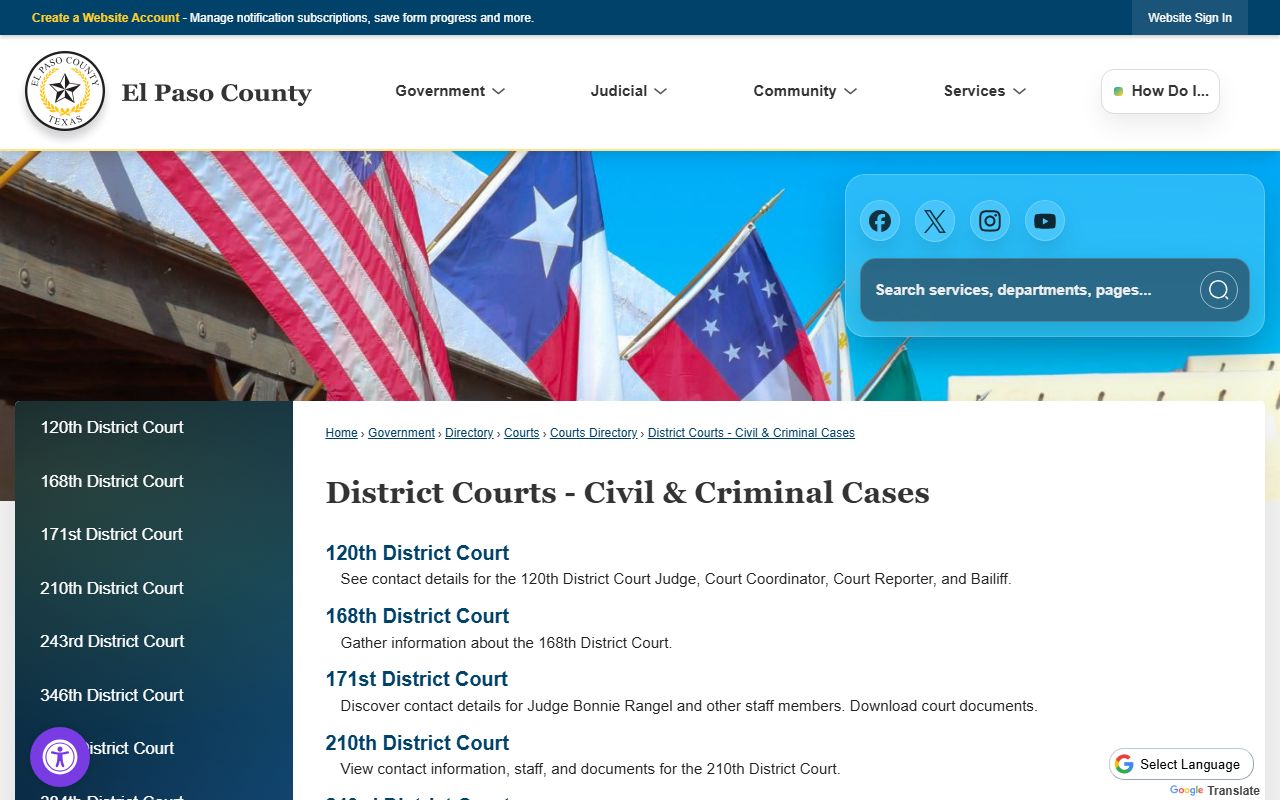
The county district courts page describes the courts that hear both civil and criminal cases. Others handle a single type, which the next sections cover.
List of El Paso County District Courts
The county's district courts sit in the downtown courthouse at 500 E. San Antonio Avenue. The roster below groups them by the case types each one carries. The District Clerk keeps the records for all of them, so records requests route to that office.
| Court | Case Types | Location |
|---|---|---|
| 34th, 120th, 168th, 171st, 210th, 243rd, 346th, 384th District Courts | Civil and criminal | 500 E. San Antonio Ave. |
| 41st, 205th, 448th District Courts | Civil only | 500 E. San Antonio Ave. |
| 327th, 409th District Courts | Criminal only | 500 E. San Antonio Ave. |
| 65th, 383rd, 388th District Courts | Family only | 500 E. San Antonio Ave. |
| Criminal District Court No. 1 | Civil and criminal group | 500 E. San Antonio Ave. |
Most of the county's district courts carry both civil and criminal dockets, which keeps the courthouse busy across case types. A handful focus on a single area, like the criminal-only or family-only courts, so judges can specialize. The case number, not the court number, is the surest way to pull the right file.
Note: Court assignments can change, so confirm the current court for a case through the case search or the District Clerk before you rely on it.
Judicial District and Regional Reach
El Paso County's courts sit within Texas judicial districts, and one detail surprises people: a judicial district can cross county lines. The 34th Judicial District covers El Paso, Culberson, and Hudspeth counties, which is why the District Attorney prosecutes cases in all three. The numbered district courts themselves sit in the El Paso courthouse and hear El Paso County cases.
The numbers on the courts, like 34th, 65th, or 388th, are identities the Legislature set over time, not a ranking. A higher number does not mean a higher court. They are all district courts of equal trial-level standing, and the case type assigned to each is what tells you where a matter is likely heard.
Civil, Criminal, and Family Assignments
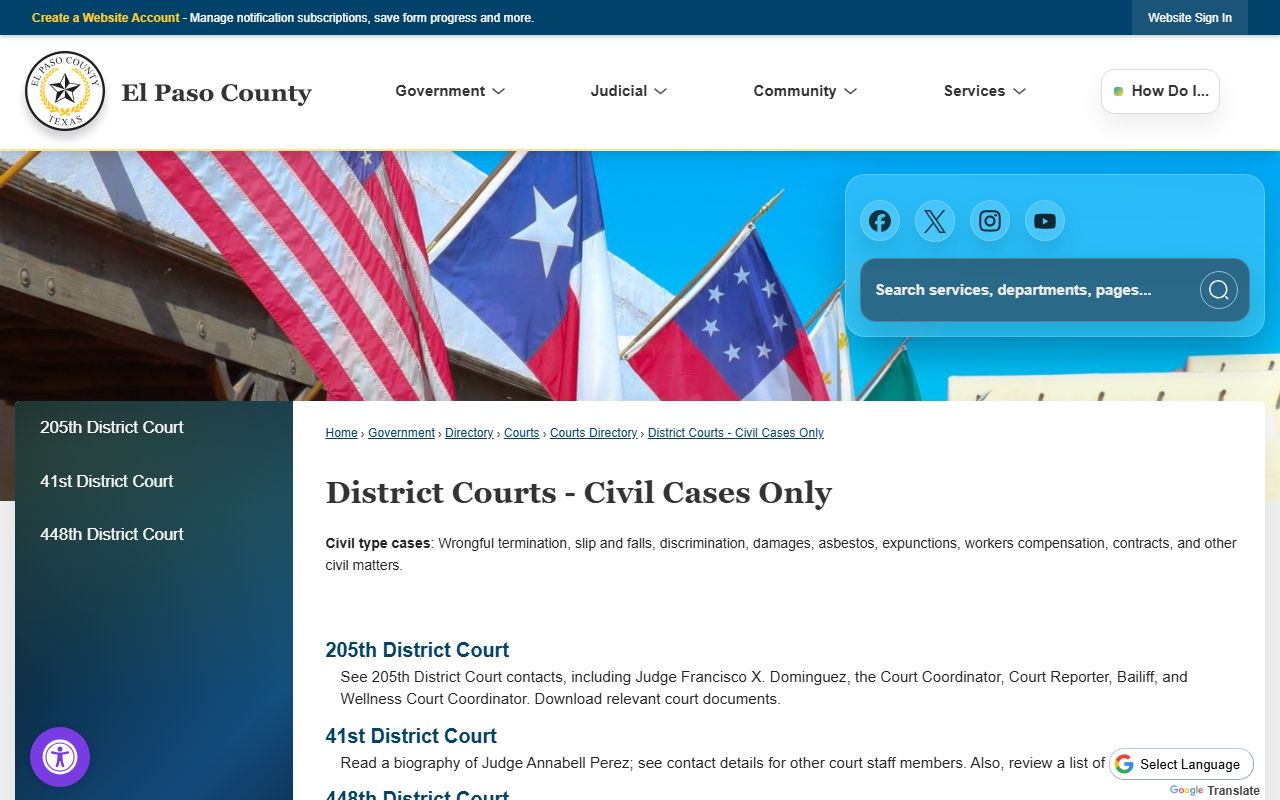
El Paso County splits its district courts so judges can focus. Civil-only courts hear suits like contract, injury, and property disputes without a criminal docket.
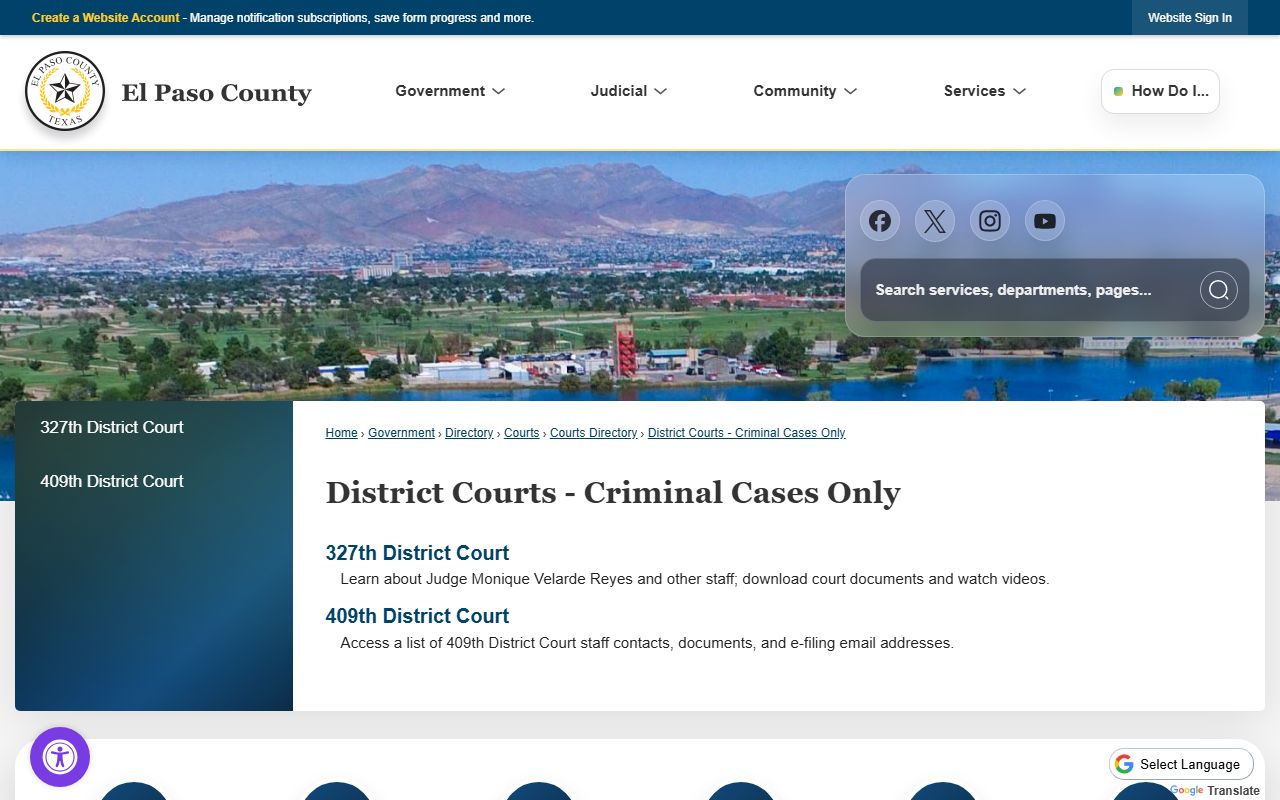
Criminal-only courts focus on felony prosecutions, from charging through trial and sentencing.
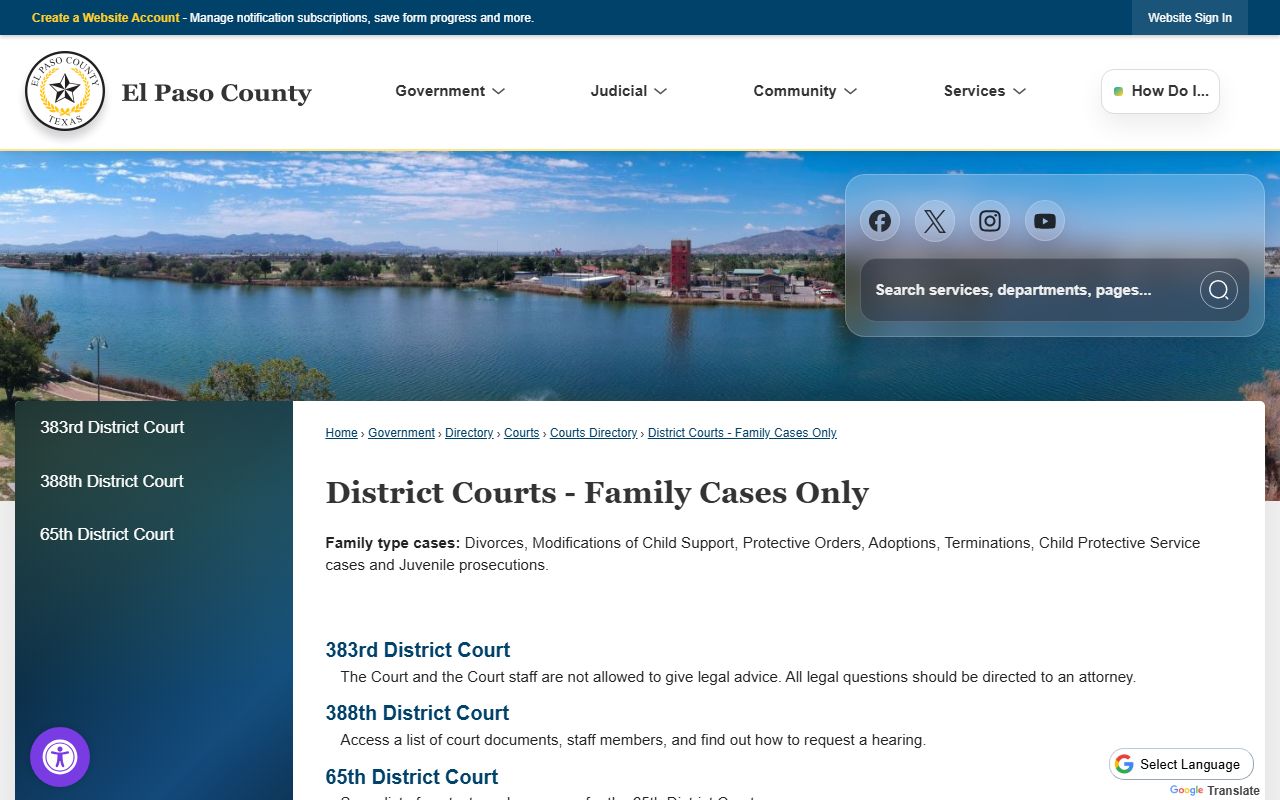
Family-only courts handle divorce, child support, custody, protective orders, adoptions, terminations, CPS cases, and juvenile prosecutions.
The remaining courts hear a mix of civil and criminal cases. This grouping is why the court on a case may not match what you expect from the case type alone. Because cases are grouped this way, the fastest path is to search by name or case number rather than guessing the court, since the search returns the assigned court for you.
What El Paso County District Court Records Include
A district court file holds the full life of a case. In a civil suit, that means the petition, answers, motions, orders, and the final judgment. In a criminal case, it means the indictment, bond and plea, settings, the verdict or plea, and the sentence. Family files add temporary orders, parenting plans, and final decrees.
Some of these files are public, and some are not. Juvenile, adoption, and sealed records are restricted by law, even though the court that holds them is a public district court. The case search shows the index and docket, while full documents and certified copies come from the District Clerk.
District Court vs County Court vs Justice Court
Texas stacks its trial courts by the size and type of case. Knowing the differences helps you find the right court and understand what it can do.
| District Court | County Court at Law | Justice Court | |
|---|---|---|---|
| Civil Reach | Higher-value and general | Mid-level civil | Small claims up to $20,000 |
| Criminal | Felonies | Misdemeanors | Class C, fine-only |
| Family Cases | Yes | Some | No |
| Jury Size | 12 | 6 | 6 |
For the lower levels, see the County Courts at Law and Justice of the Peace pages.
How a Case Moves Through the El Paso County System
A case climbs through the levels of Texas courts, and an appeal goes up from the trial court. The flow differs for criminal and civil matters, but both can end at the state's high courts.
Court ladder: Justice Court › County Court at Law › District Court › Eighth Court of Appeals › Supreme Court of Texas or Court of Criminal Appeals
Criminal flow: Arrest › Magistrate › Indictment › Arraignment › Pretrial › Trial › Sentencing › Appeal
Civil flow: Petition › Answer › Discovery › Mediation › Trial › Judgment › Appeal
The 65th District Protective Order Court
El Paso County runs a specialized protective order court within the 65th District. It gives victims a fast forum to present a protective order application within the fourteen-day window the law sets. That speed matters in family violence cases, where waiting can be dangerous.
The court does more than issue protective orders. It also keeps the related family law cases between the same parties, such as a divorce, custody, or child support matter. Keeping those cases together avoids conflicting orders from different courts.
Associate and Specialty Courts
The district courts work alongside associate judges and specialty courts. Family associate judges and Title IV-D child support courts handle high-volume family and support dockets, which is why the judge on a hearing may differ from the main district judge. Specialty courts include a DWI drug court program and a veterans treatment court that focus on supervised treatment rather than punishment alone.
These courts share the district court system but serve focused needs. For records, they still run through the same case search and the District Clerk.
Appeals to the Eighth Court of Appeals
An appeal from an El Paso County district court generally goes to the Eighth Court of Appeals, which sits in El Paso. The appellate court reviews the trial record for legal error rather than holding a new trial. Texas then splits its highest review: the Supreme Court of Texas for civil and juvenile cases, and the Court of Criminal Appeals for criminal cases.
The District Clerk's Appeals function prepares and transmits the clerk's record that the appellate court reviews. Appeal deadlines are strict, so a party should act quickly.
The District Clerk's Role
The District Clerk is the records keeper for all of these courts. Filing, copies, citations, and jury operations run through that office. For a felony, a divorce, or a larger civil suit, the District Clerk holds the file, and certified copies come from there.
For the office details, hours, and request methods, see the District Clerk page. For county courts at law and probate, the County Clerk is the records keeper instead.
Local Rules and Courtroom Conduct
The district and county courts follow local rules that cover civil, criminal, family, and e-filing procedures, plus media guidelines for recording in the courtroom. These rules sit on top of the statewide rules and shape how cases run in El Paso County.
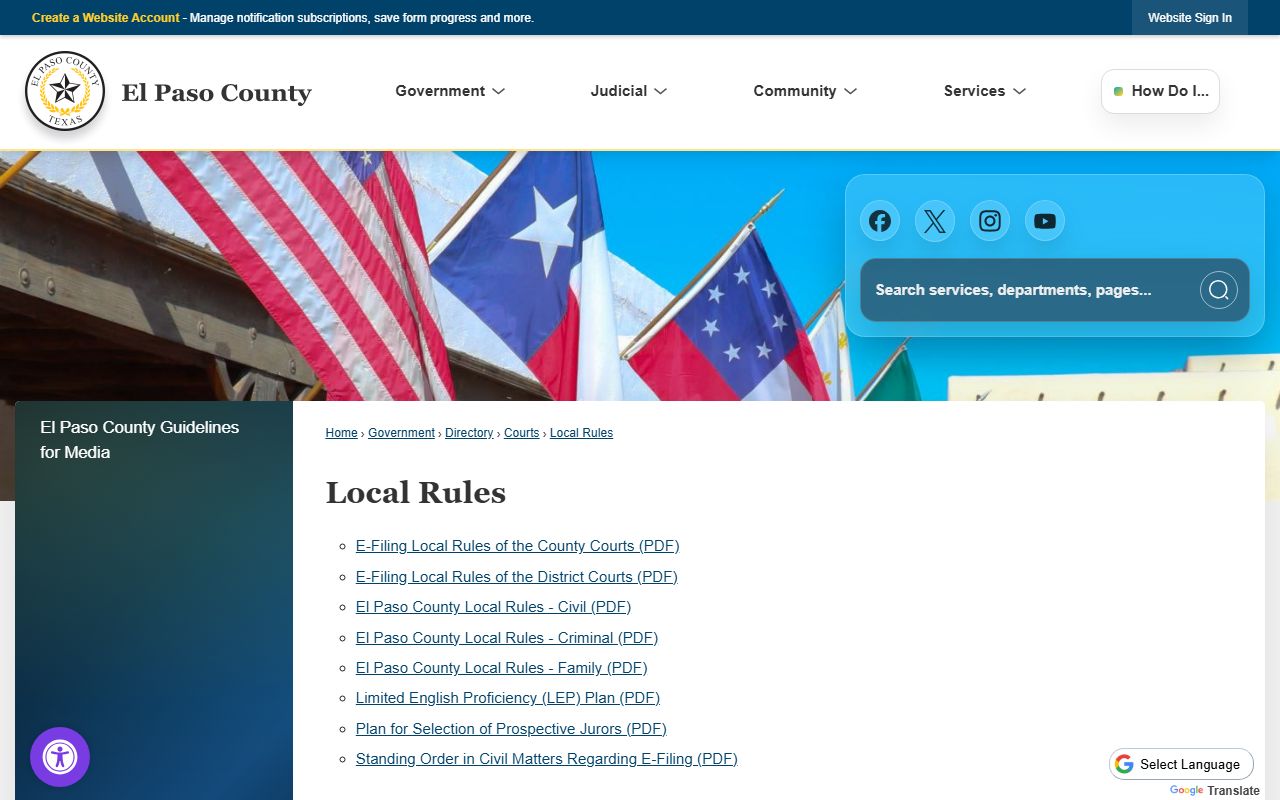
The county Local Rules page links the civil, criminal, family, e-filing, jury, and media guidelines. Do not assume you can record a hearing, since many courts limit recording without permission.
El Paso County in the Texas Court System
Texas has a layered court system, and El Paso County reflects all of it. District courts are the general trial courts, county courts at law and probate courts handle assigned matters, and justice and municipal courts cover lower-level cases. Two high courts sit at the top, one for civil and one for criminal.
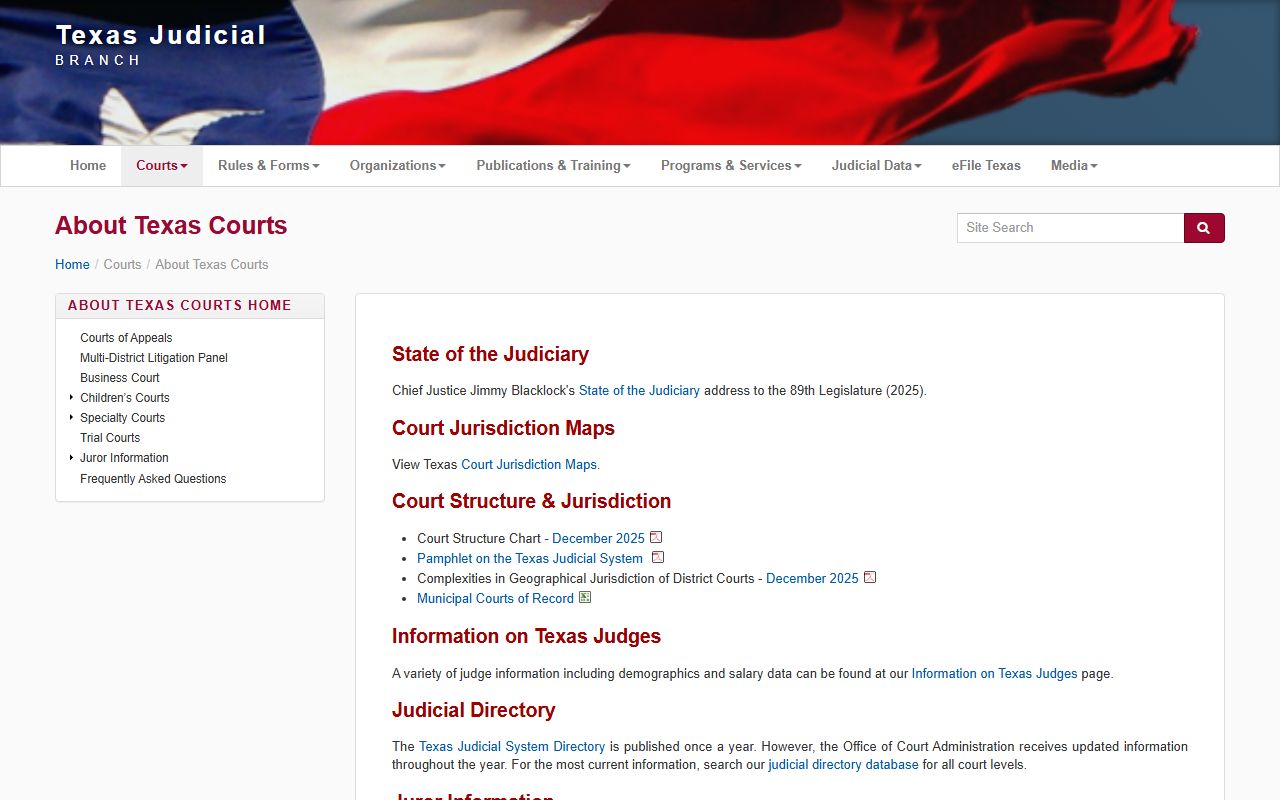
The Texas Judicial Branch overview explains how the courts fit together statewide. El Paso County's downtown campus packs many of these courts into a small area, so a single visit can touch the district courts, the clerks, and the courthouse offices in one trip.